Tall trees can make a forest feel magical. They reach toward the sky, sway in the wind, and stand like quiet guards over the land. But how can you describe their beauty in a way that helps readers picture it?
That is where similes come in.
A simile compares two different things using words such as like or as. For example, you might say, “The tall tree stood like a giant.” This comparison helps readers imagine a tree that looks huge and powerful.
Writers use similes to make stories, poems, and descriptions more vivid. They can make a tree seem strong, peaceful, mysterious, or even a little scary. The right comparison helps readers feel as if they are standing beneath its branches.
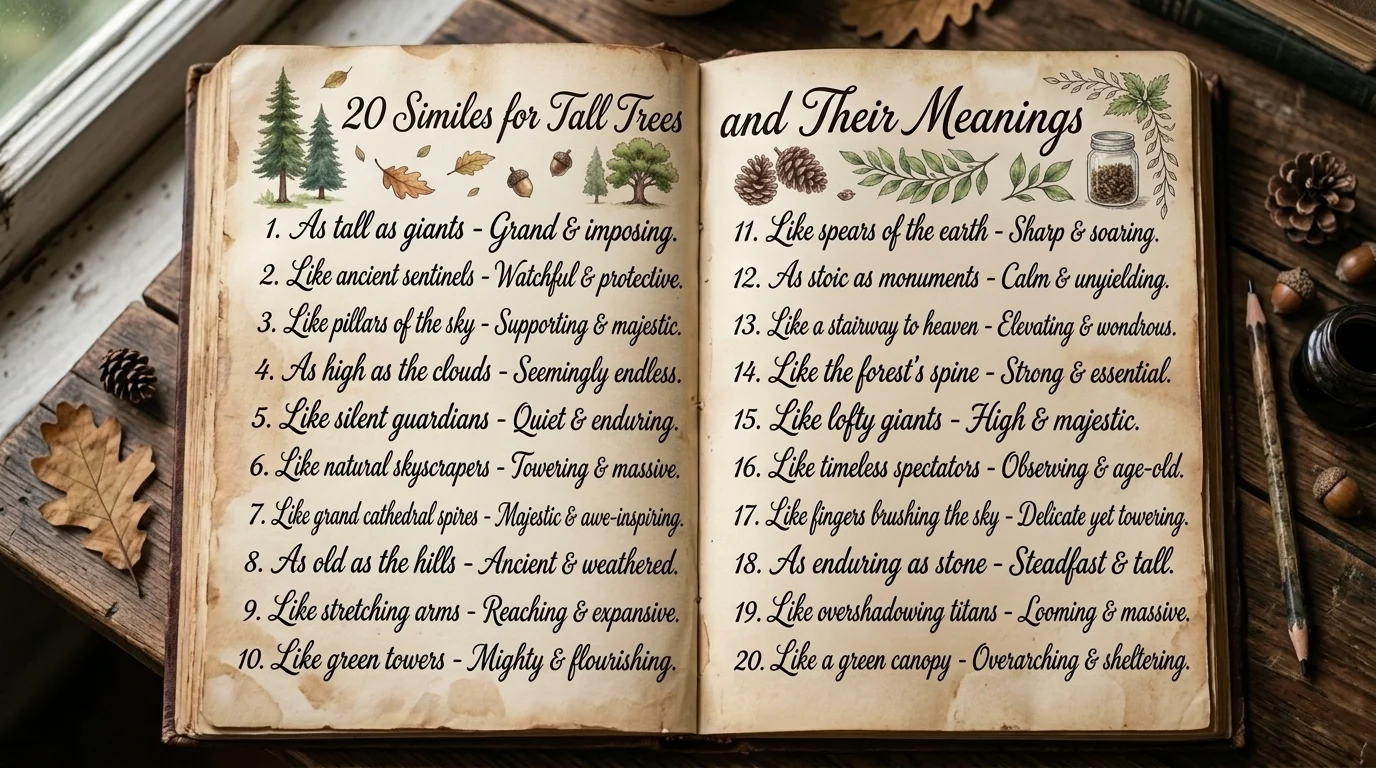
In this guide, you will find 20 similes for tall trees, their meanings, and simple example sentences. You will also learn how to use similes in writing and practice creating your own.
Let’s explore these creative writing similes and see how a few simple words can bring tall trees to life.
20 Similes for Tall Trees
Here are 20 examples of similes you can use in stories, poems, school assignments, and nature descriptions.
1. As Tall as a Giant
Meaning: Extremely tall and large.
This simile compares a tall tree to a giant. It helps readers imagine a tree that seems much bigger than everything around it.
Examples:
- The old oak tree was as tall as a giant standing in the field.
- The children stared at the tree, which rose as tall as a giant above the fence.
2. Like a Tower Reaching for the Sky
Meaning: Very tall and reaching upward.
This comparison makes a tree seem like a tall tower. It highlights the height of the trunk and branches.
Examples:
- The pine trees stood like towers reaching for the sky.
- One tall tree rose like a tower above the small houses.
3. Like Soldiers Standing at Attention
Meaning: Straight, strong, and upright.
This simile compares a row of tall trees to soldiers standing still. It suggests order, strength, and discipline.
Examples:
- The tall trees stood like soldiers standing at attention along the road.
- In the quiet forest, the pine trees looked like soldiers guarding the path.
4. Like Pillars Holding Up the Sky
Meaning: Strong and towering.
This comparison makes trees seem like huge pillars supporting the sky above them. It creates a grand and peaceful image.
Examples:
- The ancient trees rose like pillars holding up the sky.
- We walked beneath tall trees that looked like pillars in a giant hall.
5. As Straight as an Arrow
Meaning: Very straight and upright.
This simile works well for tall trees with long, narrow trunks.
Examples:
- The young pine stood as straight as an arrow.
- Tall trees lined the trail, their trunks as straight as arrows.
6. Like Giants Guarding the Forest
Meaning: Large, powerful, and protective.
This simile makes trees seem like giant guardians watching over the woods.
Examples:
- The ancient trees stood like giants guarding the forest.
- At sunset, the tall trees looked like silent giants protecting the animals below.
7. Like Skyscrapers Made of Wood
Meaning: Extremely tall trees that rise above their surroundings.
This modern comparison helps readers picture trees that seem as tall as city buildings.
Examples:
- The redwoods rose like skyscrapers made of wood.
- From the forest floor, the giant trees looked like skyscrapers reaching into the clouds.
8. Like Fingers Pointing at the Clouds
Meaning: Tall branches or treetops reaching upward.
This simile creates a clear picture of trees stretching toward the sky.
Examples:
- The bare branches looked like fingers pointing at the clouds.
- The tall trees reached like fingers toward the gray sky.
9. As High as the Clouds
Meaning: Seemingly very high.
This comparison emphasizes a tree’s impressive height. It is often used in imaginative writing.
Examples:
- The tallest trees seemed as high as the clouds.
- From the valley below, the mountain trees looked as high as the clouds.
10. Like Green Giants in the Sunlight
Meaning: Large, leafy, and full of life.
This simile gives tall trees a friendly and powerful appearance.
Examples:
- The trees glowed like green giants in the morning sunlight.
- We rested beneath green giants that towered over the meadow.
11. Like a Cathedral’s Tall Columns
Meaning: Grand, beautiful, and peaceful.
This comparison makes a forest feel like a huge, natural building. It works well when tall trees form a canopy overhead.
Examples:
- The tall trunks stood like a cathedral’s columns in the quiet forest.
- Sunlight streamed between the trees, which rose like columns in a great hall.
12. Like Giants Wearing Green Crowns
Meaning: Tall trees with broad, leafy tops.
This simile compares leafy treetops to crowns. It makes the trees seem grand and almost royal.
Examples:
- The old trees stood like giants wearing green crowns.
- Their leafy tops looked like green crowns against the blue sky.
13. Like Brushes Painting the Sky
Meaning: Tall branches and treetops that create patterns against the sky.
This is a creative simile for poems and nature writing.
Examples:
- The tall branches spread like brushes painting the sky.
- At sunset, the tree silhouettes looked like brushes drawing dark lines across the golden sky.
14. Like Ladders Climbing to Heaven
Meaning: Trees that seem to reach endlessly upward.
This imaginative comparison makes tall trees feel magical. The word heaven here describes a sense of great height, not a universal spiritual meaning.
Examples:
- The tall pines looked like ladders climbing to heaven.
- Their branches rose like ladders reaching toward the stars.
15. As Majestic as a King
Meaning: Grand, impressive, and worthy of respect.
This simile gives an old or unusually tall tree a noble appearance.
Examples:
- The ancient oak stood as majestic as a king.
- Among the smaller trees, the giant cedar looked as majestic as a king in his palace.
16. Like Green Waves Frozen in Time
Meaning: A mass of leafy treetops that seems still and endless.
This comparison is useful when many tall trees cover a hillside or stretch across a valley.
Examples:
- The forest looked like green waves frozen in time.
- From the mountain, the treetops spread like waves across the land.
17. Like a Giant Umbrella Over the Ground
Meaning: A tree with a broad canopy that provides shade.
This simile focuses on the shelter that a tall tree offers to people, animals, and plants.
Examples:
- The old tree spread like a giant umbrella over the picnic area.
- We sat beneath branches that formed a giant umbrella against the hot sun.
18. Like Watchtowers Over the Valley
Meaning: Tall trees that seem to overlook and guard the land.
This comparison works well for trees growing on hills or along mountain slopes.
Examples:
- The tall pines stood like watchtowers over the valley.
- From the winding road, the trees looked like watchtowers above the fields.
19. Like Brushes Reaching for the Stars
Meaning: Tall, narrow treetops that seem to stretch into the night sky.
This simile creates a dreamy picture, especially in stories set at night.
Examples:
- The dark pines looked like brushes reaching for the stars.
- Under the moonlight, the branches stretched like brushes toward the sparkling sky.
20. Like Silent Giants in a Dream
Meaning: Tall trees that create a peaceful, strange, or magical feeling.
This simile is useful for fantasy stories, poems, and descriptions of quiet forests.
Examples:
- The mist-covered trees stood like silent giants in a dream.
- As we entered the forest, the tall trees seemed like silent giants watching from the shadows.
How to Use Similes for Tall Trees in Writing
Similes can make a simple sentence more interesting. The key is to choose a comparison that matches the feeling you want to create.
Here are four easy tips.
1. Think about the tree’s height.
If you want to show how tall a tree is, compare it to a tower, skyscraper, or giant.
Example: The redwood rose like a skyscraper above the forest floor.
2. Describe how the tree looks.
Think about its shape, leaves, branches, and trunk.
Example: Its branches spread like fingers across the sky.
3. Match the simile to the mood.
A peaceful scene may need a gentle comparison. A scary scene may need a darker one.
Example: The trees stood like silent giants in the fog.
4. Keep your sentence clear.
You do not need a long comparison to make an impression. A short, familiar image can be powerful.
Example: The pine tree stood as straight as an arrow.
Remember, the best simile helps readers picture the scene without making them stop to work out what you mean.
Practice Exercise: 10 Questions About Similes for Tall Trees
Test your understanding with these questions. Try answering them before checking the answer key.
Questions
1. Identify the simile.
“The tall tree stood like a giant beside the house.”
Which words form the simile?
2. Complete the simile.
“The pine tree stood as straight as an ______.”
3. Choose the best answer.
What does “The trees stood like soldiers at attention” suggest?
A. The trees were short and weak.
B. The trees looked upright and orderly.
C. The trees were moving quickly.
4. Fill in the blank.
“The treetops spread like green ______ across the hillside.”
A. waves
B. books
C. shoes
5. Identify the comparison.
“The branches looked like fingers pointing at the clouds.”
What are the branches compared to?
6. Choose the best simile for a peaceful forest.
A. The trees roared like angry engines.
B. The trees stood like silent giants in a dream.
C. The trees ran like racing cars.
7. Complete the sentence.
“The tall trees rose like ______ reaching for the sky.”
Write one suitable word or phrase.
8. What does this simile mean?
“The old tree spread like a giant umbrella over the bench.”
9. Create your own simile.
Complete this sentence with a creative comparison:
“The tall oak tree was as ______ as ______.”
10. Improve the sentence.
Rewrite this sentence using a simile:
“The trees were very tall.”
Answers and Explanations
1. Answer: “Like a giant.”
The phrase compares the tree to a giant to show its impressive size.
2. Answer: “Arrow.”
“As straight as an arrow” describes something that is very straight.
3. Answer: B. The trees looked upright and orderly.
The comparison helps readers imagine trees standing in straight, firm rows.
4. Answer: A. Waves.
“Green waves” describes the rolling appearance of treetops across a hillside.
5. Answer: Fingers.
The branches are compared to fingers because both can spread outward or point upward.
6. Answer: B. The trees stood like silent giants in a dream.
This comparison creates a quiet, magical feeling.
7. Sample answer: “Towers.”
“The tall trees rose like towers reaching for the sky” emphasizes their height. Other answers, such as giants or pillars, can also work.
8. Answer: The tree has wide branches that provide shade over the bench.
The umbrella comparison helps readers picture the tree’s protective canopy.
9. Sample answer: “The tall oak tree was as strong as a fortress.”
This comparison suggests that the tree looks powerful and sturdy. Many other creative answers are possible.
10. Sample answer: “The trees stood like skyscrapers above the forest floor.”
The simile makes the trees’ height easier to imagine by comparing them to tall buildings.
Conclusion
Similes are a simple way to make your writing more vivid and engaging. By comparing tall trees to giants, towers, pillars, and other familiar things, you can help readers picture their height, strength, and beauty.
These 20 similes for tall trees can work in poems, short stories, school assignments, and nature descriptions. You can use them as they are or change them to fit your own ideas.
When creating your own similes, think about what makes the tree special. Is it tall, strong, peaceful, or mysterious? Choose a comparison that shows that quality clearly.
Most importantly, keep practicing. Look at the trees around you and imagine what they resemble. With a little creativity, even a simple tree can become the start of a wonderful description.

I am Beau Thomas, the Administrator at SimilyHub. I enjoy making similes, metaphors, and idioms easy to understand through clear explanations, helpful examples, and engaging content for English learners and writers.