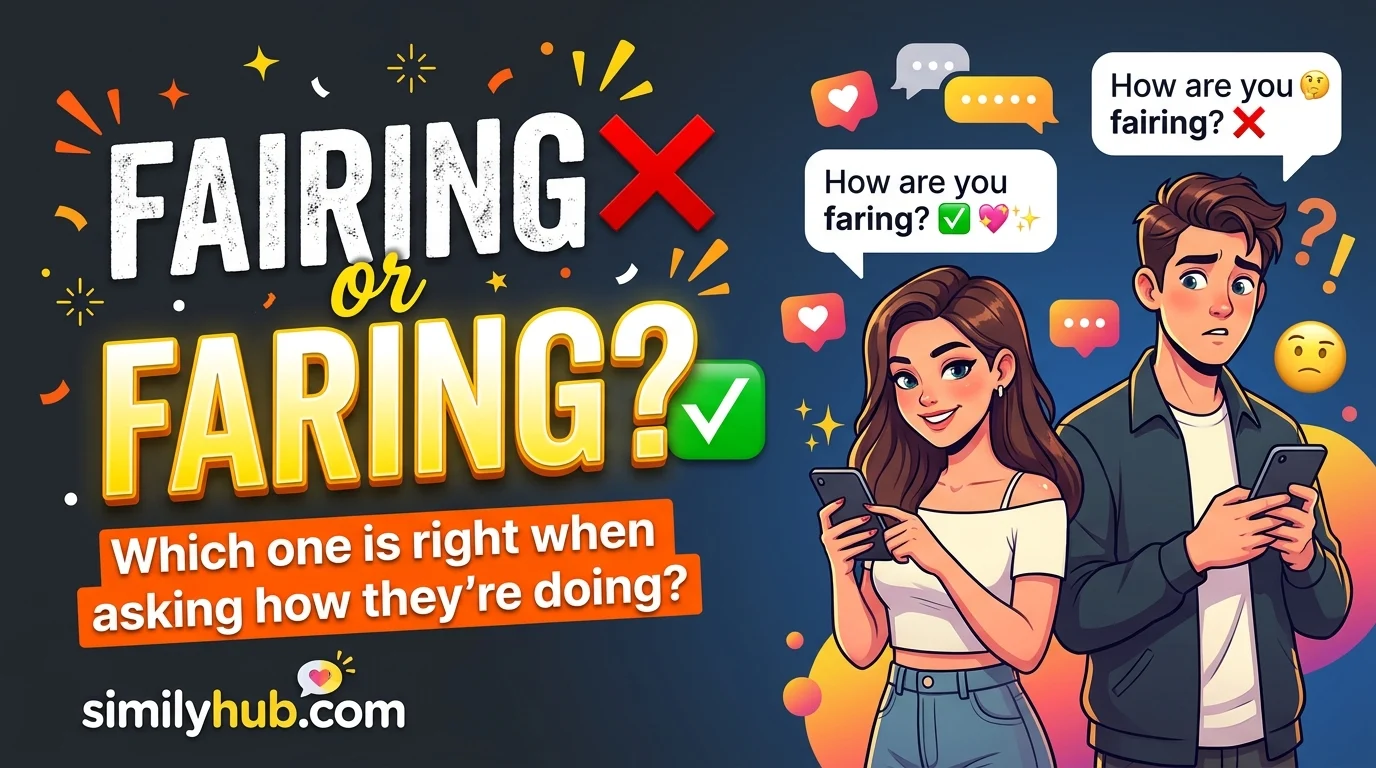
Have you ever wondered whether to write fairing or faring in a sentence? These two words look and sound almost identical, but they have different meanings and uses. Choosing the wrong spelling can change the meaning of your sentence, especially when discussing progress, performance, vehicles, or personal experiences.
The main difference is that fairing usually refers to a streamlined covering or structure designed to reduce air resistance on vehicles, aircraft, motorcycles, or boats. In contrast, faring is the present participle of the verb fare, which means to get along, perform, or experience a particular situation. For example, a motorcycle has a protective fairing, but a person might be faring well in a new job. Both words are correct, but they are not interchangeable. Understanding their meanings, grammatical forms, and practical examples will help you use them correctly in everyday and professional English.
Quick Answer: Fairing vs. Faring
Fairing refers to a streamlined covering that reduces air resistance or improves the shape of a vehicle or aircraft. Faring is the present participle of fare, meaning to get along, progress, or experience something. Use fairing when discussing vehicle components and faring when describing how someone or something is doing.
Why Do People Confuse Fairing and Faring?
People often confuse fairing and faring because they have almost identical pronunciations. The only spelling difference is the extra letter i in fairing.
However, their meanings are completely different:
- Fairing: A streamlined covering used on vehicles, aircraft, and other structures.
- Faring: Describes how someone or something is progressing or experiencing a situation.
Another reason for confusion is that both words are connected to different root words:
- Fairing comes from fair.
- Faring comes from fare.
Understanding their root words makes it easier to choose the correct spelling.
What Does Fairing Mean?
Fairing is a noun that refers to a smooth, streamlined covering or structure designed to reduce air resistance, protect components, or improve the aerodynamic shape of an object.
It is commonly used in automotive engineering, aviation, motorcycles, and marine design.
Examples of Fairing in Sentences
- The motorcycle’s fairing protects the rider from wind.
- The airplane has a lightweight fairing around its landing gear.
- The engineer designed a new fairing to improve aerodynamics.
- The damaged motorcycle fairing needed replacement.
- The rocket’s nose fairing protects its payload during launch.
When Is Fairing Used?
Use fairing when discussing:
- Motorcycles: Protective body panels that improve airflow.
- Aircraft: Structures that cover joints or components to reduce drag.
- Rockets: Protective coverings around payloads.
- Automobiles: Streamlined structures that improve aerodynamic performance.
- Boats: Structures designed to improve shape and water or airflow performance.
What Does Faring Mean?
Faring is the present participle of the verb fare. It means getting along, making progress, or experiencing a particular situation.
It is often used when asking or explaining how someone is doing in life, work, school, or a difficult situation.
Examples of Faring in Sentences
- How are you faring in your new job?
- The students are faring well in their examinations.
- She is faring better after changing her routine.
- The company is faring well despite financial challenges.
- The team is faring poorly this season.
When Is Faring Used?
Use faring when describing:
- Personal experiences: How are you faring these days?
- Work performance: He is faring well in his new position.
- Education: The students are faring better this semester.
- Business performance: The company is faring well in the market.
- Sports: The team is faring poorly in the competition.
Fairing vs. Faring: Comparison Table
| Feature | Fairing | Faring |
|---|---|---|
| Root word | Fair | Fare |
| Word type | Noun | Verb form |
| Meaning | Streamlined covering | Getting along or progressing |
| Main use | Engineering and vehicles | Experiences and situations |
| Common context | Motorcycles, aircraft, rockets | Work, school, life |
| Example | The fairing is damaged. | She is faring well. |
When Should You Use Fairing or Faring?
Choosing the correct word becomes easier when you understand what your sentence describes.
Use Fairing When Talking About a Covering
Choose fairing when referring to a streamlined structure or protective covering.
Examples:
- The motorcycle’s fairing is made of durable plastic.
- The aircraft has a lightweight engine fairing.
- The mechanic repaired the damaged fairing.
In these examples, the word describes a physical component.
Use Faring When Talking About Progress or Experiences
Choose faring when describing how someone or something is doing.
Examples:
- How are you faring at your new school?
- The business is faring better this year.
- The players are faring well in the tournament.
In these examples, the word describes progress or performance.
Fairing vs. Faring: Examples in Sentences
Here are 12 practical examples to help you understand the difference.
- The mechanic replaced the damaged motorcycle fairing.
- How are you faring in your new workplace?
- The airplane’s engine fairing reduces aerodynamic drag.
- The students are faring well in their final examinations.
- The manufacturer designed a lightweight fairing for the motorcycle.
- The company is faring better than expected.
- The rocket’s nose fairing protects its payload.
- She is faring much better after receiving support.
- The motorcycle fairing was damaged during the accident.
- The team is faring poorly in the championship.
- Engineers tested the new aircraft fairing in a wind tunnel.
- How is your brother faring after moving to another city?
Examples Using Both Words
- The motorcycle fairing was damaged, but the rider was faring well after the accident.
- The company designed a new aircraft fairing while faring better in the aviation market.
- The engineer repaired the protective fairing while the project team was faring well.
Common Mistakes With Fairing and Faring
Writers sometimes confuse these words because of their similar pronunciation. Here are some common mistakes to avoid.
Incorrect: How are you fairing in your new job?
Correct: How are you faring in your new job?
Why? The sentence asks about someone’s progress or experience, so faring is correct.
Incorrect: The motorcycle’s faring was damaged.
Correct: The motorcycle’s fairing was damaged.
Why? The sentence describes a physical motorcycle component, so fairing is correct.
Incorrect: The students are fairing well in their exams.
Correct: The students are faring well in their exams.
Why? The sentence describes the students’ performance and progress.
Incorrect: The aircraft’s faring reduces air resistance.
Correct: The aircraft’s fairing reduces air resistance.
Why? A fairing is a streamlined structure that helps reduce aerodynamic drag.
Memory Trick: How to Remember Fairing vs. Faring
A simple memory trick can help you remember these two words.
- Fairing = Fair + ing: Think of a physical vehicle component or streamlined covering.
- Faring = Fare + ing: Think of how someone is getting along or progressing.
Remember these two examples:
- The motorcycle has a fairing.
- The student is faring well.
If you are talking about a physical covering, use fairing. If you are talking about someone’s progress or experience, use faring.
American vs. British English: Fairing vs. Faring
There is no spelling difference between American and British English for these two words.
Both varieties use:
- Fairing for a streamlined covering or structure.
- Faring for getting along, progressing, or experiencing something.
Examples:
- American English: How are you faring at your new job?
- British English: How are you faring at your new job?
- American English: The motorcycle fairing needs repair.
- British English: The motorcycle fairing needs repair.
The spelling and meanings remain the same in both varieties of English.
Similar Words to Fairing and Faring
Understanding related words can help you improve your vocabulary and choose the correct expression.
| Word | Meaning | Example |
|---|---|---|
| Fare | To get along or perform | How did you fare in the test? |
| Fared | Got along or experienced | She fared well in the competition. |
| Fair | Reasonable, just, or acceptable | That is a fair decision. |
| Fairly | In a reasonable or moderate way | He performed fairly well. |
| Covering | Something that protects or covers | The covering protects the equipment. |
| Casing | An outer protective structure | The device has a metal casing. |
| Streamlined | Designed to reduce resistance | The vehicle has a streamlined shape. |
| Aerodynamic | Designed to move efficiently through air | The aircraft has an aerodynamic design. |
Final Verdict: Fairing or Faring?
Both fairing and faring are correct English words, but they have different meanings and uses.
- Use fairing when referring to a streamlined covering or protective structure, especially on motorcycles, aircraft, and rockets.
- Use faring when describing how someone or something is getting along, progressing, or experiencing a situation.
For example, a motorcycle has a fairing, while its rider may be faring well after a long journey.
The easiest way to remember the difference is that fairing describes a physical component, whereas faring describes progress or experience.
Frequently Asked Questions (FAQs)
Is it fairing or faring?
Both spellings are correct, but they have different meanings. Fairing refers to a streamlined covering, while faring means getting along or making progress. The correct choice depends on the context.
What is the difference between fairing and faring?
The main difference is that fairing is a noun describing a streamlined structure, while faring is the present participle of fare, meaning to progress or experience something.
Is faring a real word?
Yes, faring is a real English word. It is the present participle of the verb fare. For example: She is faring well in her new job.
What does fairing mean in simple words?
Fairing means a smooth covering or structure designed to improve airflow, reduce resistance, or protect parts of a vehicle or aircraft.
What does faring mean in a sentence?
Faring means getting along, progressing, or experiencing a situation. For example: How are you faring in your new school?
Is it how are you fairing or how are you faring?
The correct expression is How are you faring? It asks someone how they are doing or managing in a particular situation. Fairing is incorrect in this context.
What is the plural of fairing?
The plural of fairing is fairings. For example: The motorcycle manufacturer produces different types of fairings.
Is fairing related to motorcycles?
Yes, fairing is commonly used in motorcycle terminology. It refers to the body panels or protective coverings that help improve airflow, reduce wind resistance, and protect certain motorcycle components.
Remember This
- Fairing = A streamlined covering or protective structure.
- Faring = Getting along, progressing, or experiencing something.
- Fare = To get along or perform.
- Fared = The past tense of fare.
- Fairings = The plural form of fairing.
Conclusion
Understanding the difference between fairing vs. faring is easy when you remember what each word describes. Fairing refers to a physical covering or streamlined structure commonly found on motorcycles, aircraft, and rockets. On the other hand, faring describes how someone or something is doing, progressing, or experiencing a particular situation.
Whenever you are unsure which spelling to use, consider the meaning of your sentence. If you are discussing a vehicle component or protective covering, choose fairing. If you are describing someone’s progress, performance, or experience, choose faring. This simple distinction will help you use both words correctly in everyday English.

I am Beau Thomas, the Administrator at SimilyHub. I enjoy making similes, metaphors, and idioms easy to understand through clear explanations, helpful examples, and engaging content for English learners and writers.