Have you ever read a story where a writer describes someone’s lips as soft as silk or red as a rose? These simple comparisons help you picture the person and feel the mood of the scene. They are called similes.
Similes are a fun way to make your writing more vivid. They compare two different things using words such as like or as. Instead of saying that someone has soft lips, you might say, “Her lips were as soft as velvet.” This gives the reader a clearer picture.
If you enjoy writing stories, poems, love letters, or character descriptions, learning similes for lips can help you express your ideas in fresh ways. You can use them to show beauty, love, sadness, anger, or even a playful smile.
In this guide, we will explore 20 creative similes for lips, explain what each one means, and show you how to use it in a sentence. You will also find a short exercise to test your skills.
Ready to make your writing more expressive? Let’s explore these examples of similes together!
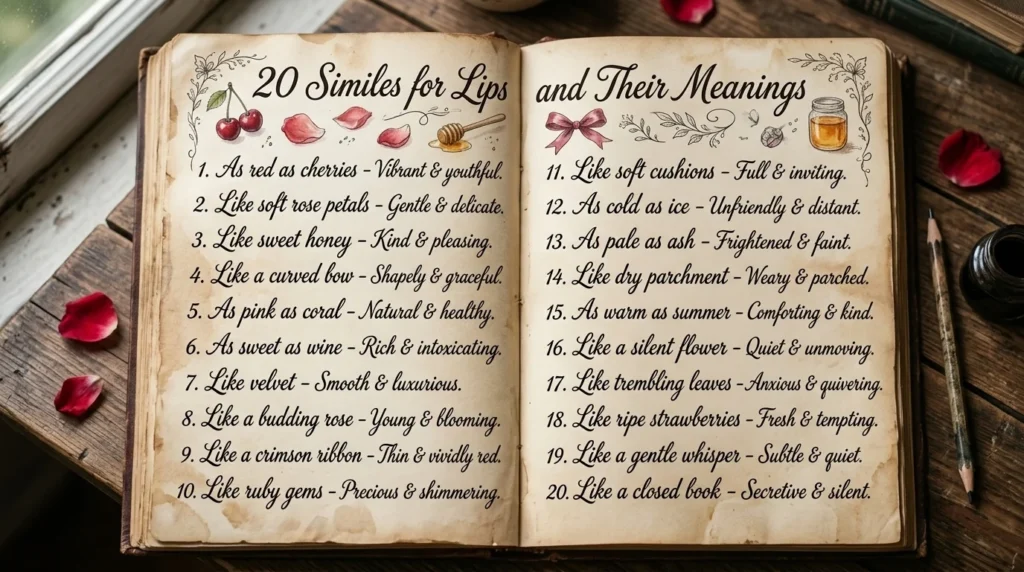
20 Similes for Lips and Their Meanings
1. Lips as Soft as Silk
Meaning: This simile describes lips that feel very smooth and gentle.
Silk is known for its soft texture. Comparing lips to silk creates a feeling of comfort, beauty, and tenderness.
Examples:
- Her lips were as soft as silk when she kissed his cheek.
- The poet described her lips as soft as silk in his love poem.
2. Lips Like a Rose
Meaning: This simile suggests that lips are beautiful, delicate, or naturally red.
A rose often represents beauty and love. This comparison works well in romantic stories and poems.
Examples:
- Her lips were like a rose in the warm evening light.
- He smiled at her lips, which looked like a fresh red rose.
3. Lips as Red as Cherries
Meaning: This simile describes lips with a bright red color.
Cherries are often linked with rich color and sweetness. This image can make a character’s appearance more vivid.
Examples:
- Her lips were as red as cherries against her pale skin.
- The artist painted the girl’s lips as red as cherries.
4. Lips Like Velvet
Meaning: This simile suggests a smooth, soft, and luxurious texture.
Velvet feels gentle to the touch. Writers often use this comparison to create a warm or romantic mood.
Examples:
- His lips felt like velvet against her cheek.
- She described his lips as smooth as velvet in her diary.
5. Lips as Sweet as Honey
Meaning: This simile suggests sweetness, kindness, or loving words.
Honey has a rich, sweet taste. In creative writing, it can also suggest that someone’s words are gentle and pleasing.
Examples:
- Her lips were as sweet as honey when she whispered his name.
- His lips were as sweet as honey as he spoke words of comfort.
6. Lips Like a Bow
Meaning: This simile describes lips with a curved shape, often resembling a bow.
It is especially useful when describing the shape of someone’s mouth or a character’s delicate features.
Examples:
- Her lips looked like a bow drawn across her face.
- The portrait showed lips shaped like a little red bow.
7. Lips as Dry as Sand
Meaning: This simile describes lips that feel rough, cracked, or very dry.
Sand can suggest dryness and discomfort. This comparison is useful for describing hot weather, thirst, or exhaustion.
Examples:
- After walking through the desert, his lips were as dry as sand.
- Her lips felt as dry as sand after spending hours in the sun.
8. Lips Like a Painted Picture
Meaning: This simile suggests that lips look beautiful, colorful, or carefully styled.
It can describe someone wearing lipstick or a character whose appearance seems almost artistic.
Examples:
- Her lips looked like a painted picture beneath the bright lights.
- With their deep red color, her lips were like a painted picture.
9. Lips as Cold as Ice
Meaning: This simile can describe lips that feel cold or suggest emotional distance.
Ice is associated with coldness. Depending on the context, this comparison can create a physical or emotional image.
Examples:
- His lips were as cold as ice after playing outside in winter.
- She pressed her cold lips together, as cold as ice, before answering.
10. Lips Like a Sweet Peach
Meaning: This simile suggests softness, warmth, and a gentle pink color.
A peach has soft skin and a warm color. This comparison can help describe a character in a delicate, gentle way.
Examples:
- Her lips looked like a sweet peach in the morning sunlight.
- The painter gave the child lips like a sweet peach.
11. Lips as Thin as a Thread
Meaning: This simile describes lips that look very narrow when pressed together.
A thread is thin and narrow. The comparison is especially useful when showing tension, worry, or disapproval.
Examples:
- He pressed his lips together until they looked as thin as a thread.
- Her lips became as thin as a thread when she heard the bad news.
12. Lips Like a Ribbon
Meaning: This simile describes lips with a smooth, curved, or elegant shape.
A ribbon can create an image of graceful lines and soft curves.
Examples:
- Her lips curved like a ribbon as she began to smile.
- The artist painted her lips like a red ribbon across her face.
13. Lips as Bright as a Ruby
Meaning: This simile describes lips with a rich, deep red color.
Rubies are precious red gemstones. They often suggest beauty, value, and elegance.
Examples:
- Her lips were as bright as a ruby beneath the stage lights.
- The queen’s lips looked as bright as a ruby in the royal portrait.
14. Lips Like a Closed Door
Meaning: This simile suggests silence, secrecy, or a refusal to speak.
A closed door keeps others out. In the same way, closed lips can show that someone is hiding a thought or holding back words.
Examples:
- His lips were like a closed door when his friends asked what happened.
- She kept her lips like a closed door, refusing to reveal the secret.
15. Lips as Gentle as a Breeze
Meaning: This simile suggests a soft, tender, or delicate touch.
A gentle breeze feels light and soothing. This comparison can create a calm, romantic mood.
Examples:
- Her kiss was as gentle as a breeze on a summer morning.
- He touched his lips to her forehead as gently as a breeze.
16. Lips Like a Scarlet Ribbon
Meaning: This simile describes lips with a strong red color and a graceful shape.
Scarlet is a bright shade of red. The ribbon image adds a sense of elegance and style.
Examples:
- Her lips looked like a scarlet ribbon against her dark dress.
- The poet described her lips as a scarlet ribbon in the candlelight.
17. Lips as Tight as a Knot
Meaning: This simile shows tension, anger, fear, or an effort to stay silent.
A tight knot is hard to loosen. Similarly, tightly pressed lips can reveal feelings that someone does not want to express.
Examples:
- His lips were as tight as a knot when he heard the accusation.
- She kept her lips as tight as a knot to stop herself from shouting.
18. Lips Like a Whisper
Meaning: This simile suggests softness, quietness, or a delicate expression.
A whisper is gentle and low. This image works well in quiet, emotional scenes.
Examples:
- Her lips moved like a whisper as she said goodbye.
- His lips formed a whisper of a smile when he saw his old friend.
19. Lips as Warm as Summer
Meaning: This simile suggests warmth, comfort, affection, or a welcoming touch.
Summer often brings to mind sunshine and pleasant warmth. This comparison can help create a loving or peaceful atmosphere.
Examples:
- Her kiss felt as warm as summer after a long, lonely winter.
- He remembered her lips as warm as summer sunshine.
20. Lips Like a Silent Promise
Meaning: This simile suggests unspoken love, trust, or a strong feeling that does not need words.
A silent promise is communicated through actions or expressions rather than speech. This comparison works well in emotional stories.
Examples:
- Her lips curved into a smile like a silent promise that she would return.
- He looked at her lips, which seemed like a silent promise of hope.
How to Use Similes for Lips in Your Writing

Now that you have explored these 20 examples, you can start using them in your own work. The best simile depends on what you want your reader to imagine or feel.
Here are a few simple tips:
- Choose the right mood: Use “lips as soft as silk” for tenderness and “lips as tight as a knot” for anger or tension.
- Think about the details: Decide whether you want to describe color, shape, texture, or emotion.
- Avoid repeating comparisons: If you have already used a rose to describe lips, try a different image later.
- Keep it natural: A simile should fit the character and scene. It should not make a simple sentence hard to understand.
- Read it aloud: If the sentence sounds awkward, try a shorter or clearer comparison.
For example, instead of writing, “She was sad,” you could write, “She pressed her lips together like a closed door.” This gives the reader a clue about her feelings without explaining everything.
Creative writing similes work best when they help readers picture a scene or understand a character.
Practical Exercise: Test Your Simile Skills
Try these 10 questions before checking the answers. Each one will help you practice identifying or completing similes.
Questions
1. Complete the simile: Her lips were as soft as ______.
A. Stone
B. Silk
C. Smoke
2. Which simile describes bright red lips?
- A. Lips as red as cherries
- B. Lips like a closed door
- C. Lips as dry as sand
3. Fill in the blank: After walking in the hot sun, his lips were as dry as ______.
A. Ice
B. Sand
C. Velvet
4. What does “lips like a closed door” suggest?
A. Someone is keeping a secret.
B. Someone is laughing loudly.
C. Someone is feeling excited.
5. Complete the simile: Her lips were as bright as a ______.
A. Ruby
B. Cloud
C. Leaf
6. Which simile suggests anger or tension?
- A. Lips as warm as summer
- B. Lips as tight as a knot
- C. Lips like a sweet peach
7. Identify the simile: “Her lips were like a red ribbon.”
A. Her lips were beautiful.
B. Her lips were like a red ribbon.
C. Her lips were red.
8. Complete the sentence: His lips were as cold as ______ after playing in the snow.
A. Honey
B. Ice
C. A rose
9. Write your own simile: Complete this sentence with a creative comparison: “Her lips were as gentle as ______.”
10. Create a simile sentence: Describe a character who is hiding a secret by using a simile for lips.
Answers and Explanations
1. B. Silk. Silk is known for its smooth, soft texture, making it a good comparison for gentle lips.
2. A. Lips as red as cherries. Cherries have a bright red color, so this simile creates a clear visual image.
3. B. Sand. Sand suggests dryness and roughness, which fits the situation.
4. A. Someone is keeping a secret. A closed door suggests that something is being kept inside or hidden from others.
5. A. Ruby. A ruby is a red gemstone, so it can suggest rich color and beauty.
6. B. Lips as tight as a knot. A tight knot suggests tension, which can help show anger or worry.
7. B. Her lips were like a red ribbon. The word “like” directly compares lips to a ribbon, making this a simile.
8. B. Ice. Ice is very cold, so it is a natural comparison for lips chilled by snow.
9. Sample answer: “Her lips were as gentle as a summer breeze.” This comparison suggests a soft, tender feeling. Other creative answers can also be correct.
10. Sample answer: “His lips were like a closed door as he refused to reveal the secret.” The closed-door image suggests silence and hidden thoughts. Your sentence can use another suitable simile if it clearly conveys secrecy.
Conclusion
Similes for lips can make your writing more vivid, emotional, and memorable. They help you describe color, shape, texture, and feelings in a way that readers can easily picture. From lips as soft as silk to lips like a closed door, each comparison creates a different image.
The key is to choose a simile that fits the scene. A romantic poem may need a gentle comparison, while a tense story may call for an image that shows anger or silence. You do not need fancy words to write well. Simple, clear comparisons can be just as powerful.
Now it is your turn. Choose an everyday object, think about its qualities, and compare it to lips. Try writing three original similes today. With practice, you will learn how to use similes in writing with greater confidence and creativity.

I am Beau Thomas, the Administrator at SimilyHub. I enjoy making similes, metaphors, and idioms easy to understand through clear explanations, helpful examples, and engaging content for English learners and writers.