Have you ever felt stuck in a place or situation you could not escape? Maybe you felt trapped by a problem, a hard choice, or too many rules. Finding the right words for this feeling can be hard. Similes can help you describe it in a clear and powerful way.
Similes for feeling trapped compare this feeling to familiar things, such as a bird in a cage, a fish in a net, or a person lost in a maze. These comparisons help readers picture what it feels like to have no way out.
In this guide, you will find 20 creative similes for feeling trapped, along with their meanings and example sentences. You will also learn how to use similes in writing, how similes differ from metaphors, and how to create your own comparisons.
These examples are useful for stories, poems, school assignments, and descriptive writing. You can use them to show fear, stress, sadness, or frustration without simply saying, “I feel trapped.”
Let’s explore these examples of similes and see how a few simple words can make your writing more vivid and full of feeling.
20 Similes for Feeling Trapped
Here are 20 creative similes to describe feeling trapped in a place, relationship, problem, or difficult situation.
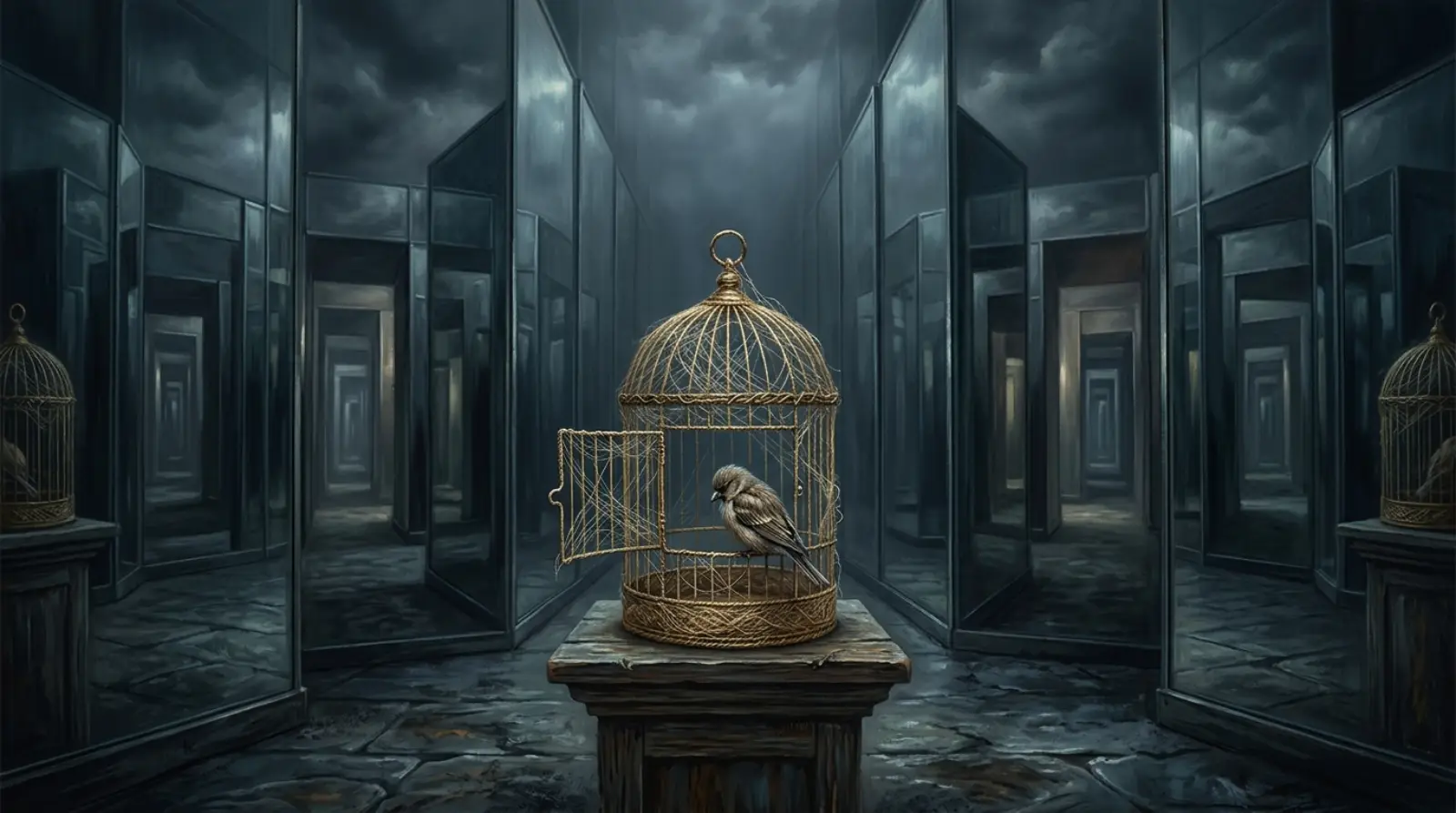
1. Like a bird in a cage
Meaning: Feeling unable to go where you want or do what you want.
What it conveys: This simile shows a strong desire for freedom. It can express sadness, loneliness, or frustration.
Example sentences:
- Mia felt like a bird in a cage when her parents would not let her go outside.
- He felt like a bird in a cage at a job that gave him no freedom.
2. Like a mouse caught in a trap
Meaning: Being stuck in a dangerous or difficult situation with few ways to escape.
What it conveys: This comparison creates a sense of fear and helplessness.
Example sentences:
- I felt like a mouse caught in a trap when everyone blamed me for the mistake.
- The thief was like a mouse caught in a trap when the police blocked every exit.
3. Like a fish caught in a net
Meaning: Feeling stuck because something holds you back.
What it conveys: This simile suggests that every attempt to escape makes the situation harder.
Example sentences:
- She felt like a fish caught in a net when her lies began to pile up.
- He was like a fish caught in a net, unable to leave the argument.
4. Like a prisoner behind bars
Meaning: Feeling locked away from freedom or choice.
What it conveys: This comparison shows how rules, fear, or other people can make someone feel powerless.
Example sentences:
- Without any say in his future, he felt like a prisoner behind bars.
- She felt like a prisoner behind bars in a home where every move was watched.
5. Like a fly stuck in a spider’s web
Meaning: Being caught in a problem that becomes harder to escape.
What it conveys: This simile creates a feeling of danger and growing helplessness.
Example sentences:
- He felt like a fly stuck in a spider’s web as his problems grew.
- The more she tried to hide the truth, the more she felt like a fly stuck in a spider’s web.
6. Like a person lost in a maze
Meaning: Feeling unable to find a way out of a confusing situation.
What it conveys: This comparison highlights confusion, worry, and the search for a solution.
Example sentences:
- I felt like a person lost in a maze when I tried to solve the problem.
- She was like someone lost in a maze, unsure which path to take.
7. Like a door locked from the outside
Meaning: Feeling that someone else controls your choices.
What it conveys: This simile suggests a lack of control and the pain of being kept out of reach of freedom.
Example sentences:
- He felt like a door locked from the outside when others made every choice for him.
- Her dreams seemed locked away, like a door locked from the outside.
8. Like a boat tied to a dock
Meaning: Wanting to move forward but being held back.
What it conveys: This comparison shows a desire for change that cannot yet be acted upon.
Example sentences:
- I felt like a boat tied to a dock, ready to sail but unable to move.
- She was like a boat tied to a dock while her friends explored the world.
9. Like a fly trapped in a jar
Meaning: Feeling stuck in a small space with limited choices.
What it conveys: This simile suggests restlessness and repeated attempts to find freedom.
Example sentences:
- He felt like a fly trapped in a jar during the long meeting.
- She was like a fly trapped in a jar, searching for a way out of her worries.
10. Like a knot that keeps getting tighter
Meaning: Feeling caught in a problem that becomes harder to solve.
What it conveys: This comparison shows rising pressure and growing frustration.
Example sentences:
- My worries felt like a knot that kept getting tighter each day.
- Their argument became like a knot that kept getting tighter, leaving neither person able to move on.
11. Like a runner stuck at the starting line
Meaning: Wanting to make progress but being unable to begin.
What it conveys: This simile shows frustration, hesitation, and blocked ambition.
Example sentences:
- I felt like a runner stuck at the starting line because I was afraid to fail.
- She was like a runner stuck at the starting line, waiting for a chance to prove herself.
12. Like a shadow chained to a wall
Meaning: Feeling unable to move beyond a place or situation.
What it conveys: This imaginative comparison creates a dark, lonely feeling of being held back.
Example sentences:
- He felt like a shadow chained to a wall, watching life pass him by.
- In the empty house, she felt like a shadow chained to a wall.
13. Like a key locked inside a box
Meaning: Having the power or potential to do something but being unable to use it.
What it conveys: This simile suggests hidden ability, lost chances, and frustration.
Example sentences:
- He felt like a key locked inside a box, unable to unlock his own future.
- Her talent seemed like a key locked inside a box because no one gave her a chance.
14. Like a train stuck on a broken track
Meaning: Being unable to move forward because something has gone wrong.
What it conveys: This comparison shows stalled progress and the need for a solution.
Example sentences:
- My plans felt like a train stuck on a broken track after the sudden change.
- Their project was like a train stuck on a broken track, going nowhere despite their hard work.
15. Like a tree with roots wrapped in stone
Meaning: Feeling unable to grow or change because of strong limits.
What it conveys: This simile suggests that a person wants to grow but faces barriers that are hard to break.
Example sentences:
- She felt like a tree with roots wrapped in stone in her strict school.
- He was like a tree with roots wrapped in stone, unable to follow his dreams.
16. Like a door in a wall with no handle
Meaning: Seeing no clear way to leave a difficult situation.
What it conveys: This comparison creates a sense of frustration and hopelessness.
Example sentences:
- Every choice felt like a door in a wall with no handle.
- He felt trapped in his job, like a door in a wall with no handle.
17. Like a balloon caught under a low ceiling
Meaning: Wanting to rise or achieve more but being held down by limits.
What it conveys: This simile suggests blocked hopes and the struggle to reach a goal.
Example sentences:
- Her dreams felt like a balloon caught under a low ceiling.
- He was like a balloon caught under a low ceiling, full of hope but unable to rise.
18. Like a person buried under a pile of boxes
Meaning: Feeling overwhelmed by problems, duties, or expectations.
What it conveys: This comparison shows pressure and the feeling that there is too much to handle.
Example sentences:
- I felt like a person buried under a pile of boxes when all my tasks came due.
- She was like someone buried under a pile of boxes, struggling to find room to breathe.
19. Like a candle burning inside a closed lantern
Meaning: Feeling hidden away or unable to show your true self.
What it conveys: This simile suggests quiet sadness and a desire to be seen or heard.
Example sentences:
- He felt like a candle burning inside a closed lantern, full of ideas he could not share.
- She was like a candle burning inside a closed lantern in a place where no one listened.
20. Like a wave held back by a wall
Meaning: Feeling a strong desire to act but being unable to do so.
What it conveys: This comparison shows powerful feelings held inside, along with frustration and pressure.
Example sentences:
- Her anger was like a wave held back by a wall as she stayed silent.
- He felt like a wave held back by a wall, eager to break free and start again.
How to Use Similes in Writing
Similes help readers picture feelings that are hard to explain. When writing about feeling trapped, choose a comparison that matches the kind of struggle your character faces.
Here are five simple tips.
1. Start with the feeling.
Ask yourself what the character feels. Are they scared, worried, lonely, or frustrated? A bird in a cage may show a need for freedom. A person lost in a maze may show confusion.
2. Use familiar things.
Compare the feeling to something readers know. Think of a locked door, a tight knot, a net, or a road blocked by fallen trees.
3. Use “like” or “as.”
These words often help form a simile.
- I felt like a mouse caught in a trap.
- He was as stuck as a car in deep mud.
4. Add sensory details.
Describe what the character sees, hears, or feels.
Instead of writing, “She felt trapped,” try this:
She felt like a bird in a cage, beating its wings against cold metal bars.
This sentence helps readers picture the struggle.
5. Match the tone.
Use gentle comparisons for quiet sadness and stronger ones for fear or anger. Do not add too many similes to one paragraph. One clear comparison can have more power than several mixed images.
When you learn how to use similes in writing, you can make stories, poems, and other creative writing similes feel more natural and vivid.
What Is a Simile?
A simile is a figure of speech that compares two different things using words such as like or as. It helps readers understand an idea by connecting it to something familiar.
Here are three simple examples:
- She felt like a bird in a cage. This compares her lack of freedom to a bird kept in a cage.
- His fear was as strong as a storm. This compares his fear to a powerful storm.
- The hallway was like a dark tunnel. This helps readers picture a long, dark space.
Similes are a form of figurative language. They do not always describe things in a literal way. Instead, they create pictures in the reader’s mind.
For example, a person who feels trapped is not always inside a real cage. The comparison shows that the person feels unable to leave or make choices.
Similes can make simple sentences more vivid. They are useful in stories, poems, speeches, and everyday conversations.
Simile vs. Metaphor
A simile and a metaphor both compare two things. The main difference is how they make the comparison.
A simile uses words such as like or as.
A metaphor says that one thing is another thing, without using like or as to make the comparison.
Compare these examples:
| Simile | Metaphor |
|---|---|
| I felt like a bird in a cage. | I was a bird in a cage. |
| Her worry was like a heavy stone. | Her worry was a heavy stone. |
| His mind was like a maze. | His mind was a maze. |
In each pair, the simile makes the comparison clear with like. The metaphor makes the comparison more direct.
Neither one needs to be taken literally. A person is not truly a bird, and worry is not really a stone.
When should you use each one?
Use a simile when you want to explain a feeling with a clear comparison. Use a metaphor when you want to make a strong, direct image.
Both can improve descriptive writing. The best choice depends on your message and the effect you want to create.
Practical Exercise: 10 Questions
Test what you have learned about similes for feeling trapped. Try to answer each question before checking the answers below.
1. Fill in the blank
I felt like a bird in a ______ when I was not allowed to go outside.
2. Identify the simile
Which sentence contains a simile?
A. The room was silent.
B. He felt like a mouse caught in a trap.
C. She opened the window.
3. Multiple choice
What does “like a person lost in a maze” suggest?
A. The person feels confused and cannot find a way out.
B. The person feels excited about a game.
C. The person knows exactly what to do.
4. Fill in the blank
Her worries felt like a knot that kept getting ______.
5. Simile or metaphor?
Is this sentence a simile or a metaphor?
“My fear was a dark cloud.”
6. Choose the best comparison
Which simile best describes someone who wants to move forward but cannot begin?
A. Like a runner stuck at the starting line.
B. Like a bird flying in the sky.
C. Like a child laughing at a joke.
7. Create your own simile
Complete this sentence with an original comparison:
“I felt trapped like ______.”
8. Identify the feeling
What feeling does “like a fly stuck in a spider’s web” suggest?
A. Freedom and joy.
B. Being caught in a difficult situation.
C. Feeling relaxed and safe.
9. Improve the sentence
Rewrite this sentence using a simile:
“He could not escape his problems.”
10. Compare two ideas
Write one simile about feeling trapped by too many tasks. Use like or as.
Answers and Explanations
Check your answers below. Some questions have many possible answers, especially those that ask you to create your own similes.
1. Cage.
The complete sentence is, “I felt like a bird in a cage.” A cage suggests being held back and unable to move freely.
2. B. He felt like a mouse caught in a trap.
The word like connects the person’s feeling to a mouse caught in a trap. This is a simile.
3. A. The person feels confused and cannot find a way out.
A maze has many paths and turns. It can represent a confusing problem with no clear answer.
4. Tighter.
The phrase “a knot that kept getting tighter” suggests that a problem is becoming harder to solve.
5. Metaphor.
“My fear was a dark cloud” directly compares fear to a dark cloud. It does not use like or as.
6. A. Like a runner stuck at the starting line.
A runner is ready to begin but cannot move forward. This matches the feeling of being unable to start.
7. Example answer: “I felt trapped like a bird in a cage.”
This is a simile because it uses like to compare the feeling of being trapped to a bird’s lack of freedom. Other clear comparisons can also work.
8. B. Being caught in a difficult situation.
A fly caught in a web cannot move freely. The image suggests helplessness and trouble finding a way out.
9. Example answer: “He felt like a mouse caught in a trap, unable to escape his problems.”
The comparison helps readers picture how difficult it feels to escape his problems.
10. Example answer: “I felt like a person buried under a pile of boxes as my tasks kept growing.”
The pile of boxes represents too many duties. This simile helps readers picture the pressure of having too much to do.
Conclusion
Similes for feeling trapped help you describe fear, stress, sadness, and the need for freedom. Comparisons such as a bird in a cage, a mouse caught in a trap, or a runner stuck at the starting line turn hard feelings into clear pictures.
Remember that a simile compares two different things using words such as like or as. Choose an image that matches the feeling you want to share. Use simple words, add helpful details, and keep your comparisons natural.
You can use these examples of similes in stories, poems, schoolwork, and everyday writing. Try creating your own similes by thinking about what feeling trapped reminds you of. With practice, your descriptive writing will become clearer, stronger, and more interesting to read.

I’m Evelyn Marie, an author passionate about similes, metaphors, and idioms. I enjoy explaining creative expressions simply, helping readers understand language and make their writing more engaging.