Bad weather can change the mood of a whole day. Dark clouds roll in, strong winds shake the trees, and heavy rain beats against the windows. But how can you describe these moments in a way that helps your readers picture them?
That is where similes for bad weather come in!
A simile compares one thing to another using words such as like or as. For example, you might write, “The wind howled like a hungry wolf.” This sentence makes the wind sound wild and scary. It helps readers imagine the noise instead of simply telling them that the wind was strong.
Similes are useful in stories, poems, school essays, and creative writing. They can make a storm feel frightening, rain sound gentle or harsh, and a cloudy sky seem gloomy. You can even use them to show how bad weather makes people feel.
In this guide, you will discover 20 creative similes for bad weather, learn what each one means, and see how to use it in a sentence. You will also get a short practice exercise to help you write your own weather comparisons.
What Is a Simile for Bad Weather?
A simile for bad weather compares a weather condition to something familiar. It uses like or as to create a clear picture in the reader’s mind.
For example:
- The wind roared like a lion. This shows that the wind was loud and powerful.
- The rain fell like a waterfall. This suggests that the rain was very heavy.
- The sky was as dark as coal. This describes a very dark, gloomy sky.
These comparisons make simple weather descriptions more vivid. Instead of saying, “It was stormy,” you can show readers what the storm looked, sounded, or felt like.
20 Similes for Bad Weather
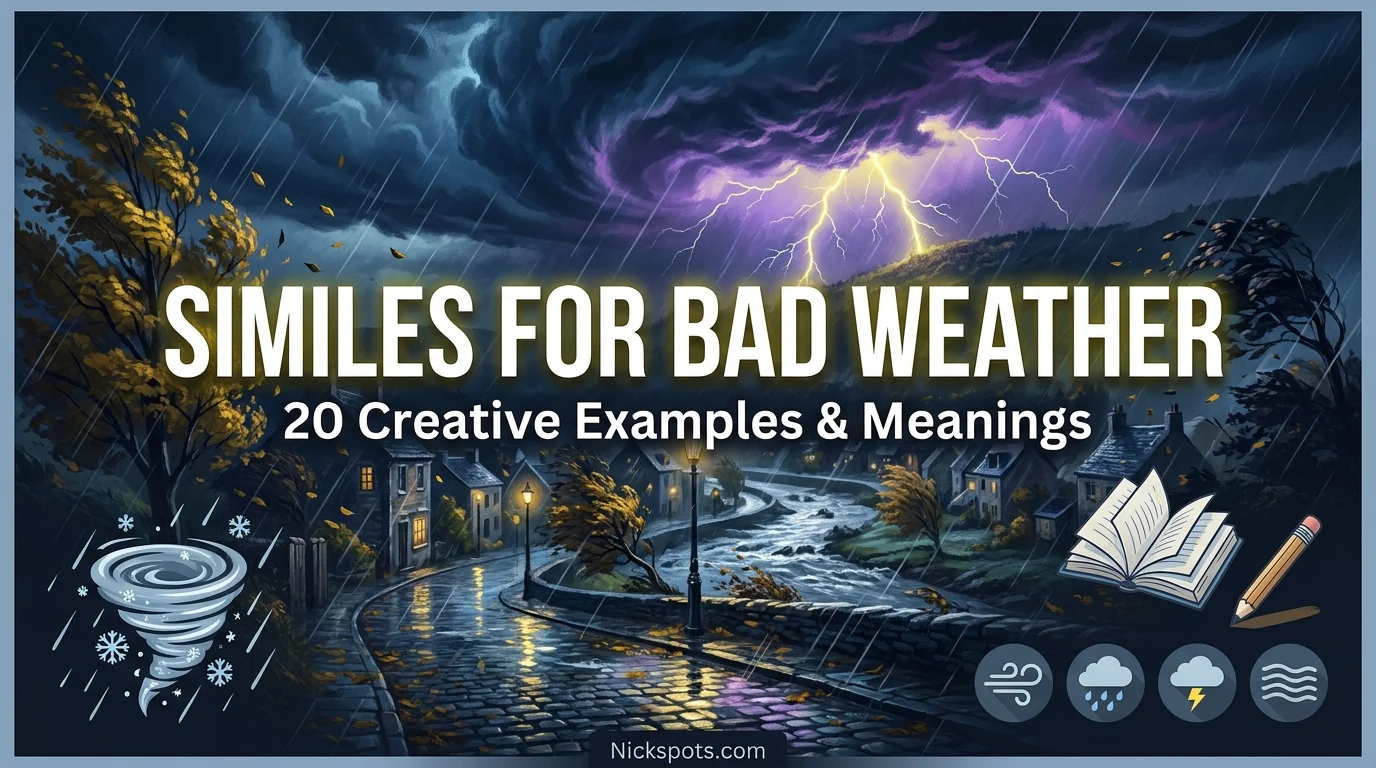
Here are 20 similes you can use in creative writing, with their meanings and example sentences.
The Wind Howled Like a Hungry Wolf
Meaning: The wind made a loud, wild, and frightening sound.
This simile compares strong wind to a wolf’s howl. It helps create a spooky mood, especially at night.
Examples:
- The wind howled like a hungry wolf outside our house.
- As the storm grew stronger, the wind howled like a hungry wolf through the trees.
The Rain Fell Like a Waterfall
Meaning: The rain was falling very heavily.
This comparison helps readers imagine large amounts of water pouring from the sky.
Examples:
- The rain fell like a waterfall, flooding the streets.
- We stayed indoors while the rain fell like a waterfall over the roof.
The Sky Was as Dark as Coal
Meaning: The sky was extremely dark and gloomy.
Coal is black, so this simile describes thick storm clouds that block the sunlight.
Examples:
- Before the storm began, the sky was as dark as coal.
- The sky grew as dark as coal, and everyone hurried home.
The Thunder Crashed Like a Giant Drum
Meaning: The thunder made a deep, loud noise.
This simile compares thunder to the powerful beat of a giant drum.
Examples:
- The thunder crashed like a giant drum above our house.
- We jumped when the thunder crashed like a giant drum in the sky.
The Lightning Flashed Like a Camera
Meaning: Lightning appeared suddenly and brightly.
This comparison helps readers imagine quick flashes of light during a storm.
Examples:
- The lightning flashed like a camera in the dark sky.
- Lightning flashed like a camera, lighting up the empty road.
The Storm Hit Like a Charging Bull
Meaning: The storm arrived with great force.
A charging bull moves powerfully, making it a useful comparison for a sudden, violent storm.
Examples:
- The storm hit like a charging bull, shaking the windows.
- Dark clouds gathered, and the storm hit like a charging bull.
The Hail Fell Like Stones
Meaning: Hailstones fell hard and fast from the sky.
This simile emphasizes the hard impact of hail hitting roofs, cars, or the ground.
Examples:
- The hail fell like stones against the metal roof.
- We watched as hail fell like stones onto the garden path.
The Clouds Gathered Like an Army
Meaning: Dark clouds gathered in large numbers, making a storm seem close.
This comparison creates an image of clouds advancing across the sky.
Examples:
- The clouds gathered like an army before the afternoon storm.
- Above the hills, the clouds gathered like an army ready for battle.
The Rain Beat Like a Drummer on the Roof
Meaning: Rain struck the roof in a steady, loud rhythm.
This simile focuses on the sound of heavy rain.
Examples:
- The rain beat like a drummer on the roof all night.
- We could barely hear the television as the rain beat like a drummer above us.
The Wind Tossed the Trees Like Toys
Meaning: Strong winds moved the trees with great force.
This comparison makes the trees seem small and helpless against the wind.
Examples:
- The wind tossed the trees like toys during the storm.
- Outside, the wind tossed the tall trees like toys in a child’s hands.
The Fog Spread Like a Thick Blanket
Meaning: Fog covered the area and made it hard to see.
This simile compares fog to a blanket that spreads over everything.
Examples:
- The fog spread like a thick blanket across the road.
- By sunrise, the fog had spread like a thick blanket over the fields.
The Cold Bit Like a Hungry Dog
Meaning: The cold felt sharp and painful.
This imaginative comparison suggests that the cold seemed to bite anyone who went outside.
Examples:
- The cold bit like a hungry dog as we walked to school.
- Without gloves, the winter air bit like a hungry dog at our fingers.
The Rain Poured Like Buckets of Water
Meaning: Very heavy rain fell from the sky.
This familiar expression helps readers picture rain coming down in large amounts.
Examples:
- The rain poured like buckets of water throughout the evening.
- We canceled the picnic because the rain poured like buckets of water.
The Storm Roared Like a Freight Train
Meaning: The storm made a loud, powerful noise.
This simile compares the sound of a storm to a large train rushing past.
Examples:
- The storm roared like a freight train across the open fields.
- At midnight, the wind and rain roared like a freight train outside.
The Clouds Hung Like Heavy Curtains
Meaning: Thick clouds covered the sky and blocked the sunlight.
This comparison makes the sky seem closed off and gloomy.
Examples:
- The clouds hung like heavy curtains over the town.
- All afternoon, the clouds hung like heavy curtains above the mountains.
The Snow Fell Like Feathers
Meaning: Snowflakes drifted gently through the air.
This simile describes soft, light snowfall. It can be used when cold weather makes the day unpleasant but the snow looks beautiful.
Examples:
- The snow fell like feathers as the wind blew through the street.
- Even in the bitter cold, the snow fell like feathers onto the rooftops.
The Wind Whistled Like a Teakettle
Meaning: The wind made a high-pitched whistling sound.
This comparison works well when wind blows through gaps in doors, windows, or buildings.
Examples:
- The wind whistled like a teakettle through the broken window.
- All night, the wind whistled like a teakettle around the old house.
The Streets Shone Like Mirrors After the Rain
Meaning: Wet streets reflected light after a downpour.
This simile describes the slippery, shiny appearance of roads after bad weather.
Examples:
- The streets shone like mirrors after the evening storm.
- Under the streetlights, the wet road shone like a mirror.
The Blizzard Swallowed the Town Like a Giant
Meaning: Heavy snow covered the town and reduced visibility.
This comparison makes a blizzard seem huge and powerful, as if it could hide everything in its path.
Examples:
- The blizzard swallowed the town like a giant, hiding the houses in white snow.
- By morning, the blizzard had swallowed the town like a giant in a white cloud.
The Weather Was as Unfriendly as a Grumpy Giant
Meaning: The weather was unpleasant, harsh, and difficult to enjoy.
This playful simile gives bad weather a personality. It works well in stories for children or lighthearted descriptions.
Examples:
- The weather was as unfriendly as a grumpy giant, so we stayed inside.
- With cold winds and dark clouds, the weather was as unfriendly as a grumpy giant.
How to Use Similes for Bad Weather in Writing
Choosing the right simile depends on the mood you want to create.
- To create fear: The wind howled like a hungry wolf.
- To show heavy rain: The rain fell like a waterfall.
- To describe darkness: The sky was as dark as coal.
- To show powerful wind: The wind tossed the trees like toys.
- To describe cold weather: The cold bit like a hungry dog.
- To create a mysterious mood: The fog spread like a thick blanket.
- To describe loud thunder: The thunder crashed like a giant drum.
Try to match your comparison to the scene. A scary storm may need powerful words, while a quiet snowy morning may need a softer image.
You can also create your own similes by thinking about what the weather looks, sounds, or feels like. For example, if the rain makes a loud noise on your window, you could compare it to fingers tapping on a table.
Similes for Bad Weather: Practice Exercise
Test your knowledge with these 10 questions. Try to answer them before checking the solutions.
Questions
Complete each simile.
- The wind howled like a hungry ______.
- The rain fell like a ______.
- The sky was as dark as ______.
- The thunder crashed like a giant ______.
- The fog spread like a thick ______.
Choose the correct answer.
– Which simile best describes very heavy rain?
A. The rain fell like feathers.
B. The rain fell like a waterfall.
C. The rain shone like a mirror.
– Which simile describes a loud storm?
A. The storm roared like a freight train.
B. The snow fell like feathers.
C. The clouds hung like curtains.
– What does “the wind tossed the trees like toys” mean?
A. The wind was gentle.
B. The wind moved the trees with great force.
C. The trees were made of toys.
Create your own similes.
- Write a simile that describes very cold weather.
- Write a simile that describes dark storm clouds.
Answers and Explanations
- Wolf: A wolf’s howl is loud and can sound frightening.
- Waterfall: A waterfall suggests a large amount of falling water.
- Coal: Coal is black, making it a useful comparison for a dark sky.
- Drum: A giant drum suggests loud, deep thunder.
- Blanket: A blanket covers something, just as fog can cover the land.
- B — The rain fell like a waterfall: This suggests heavy rain.
- A — The storm roared like a freight train: This describes a loud, powerful storm.
- B — The wind moved the trees with great force: The trees seem small compared with the wind.
- Example: The cold bit like a hungry dog. This suggests sharp, painful cold.
- Example: The dark clouds gathered like a giant army. This makes the storm seem powerful and threatening.
Your own answers may be different. A good simile creates a clear picture and uses a comparison that fits the meaning.
Frequently Asked Questions
What are some common similes for bad weather?
Common examples include “the wind howled like a wolf,” “the rain fell like a waterfall,” and “the sky was as dark as coal.” Each one helps readers imagine a different part of bad weather.
What is a simile for a storm?
A strong example is “The storm roared like a freight train.” It compares the storm’s loud sound to a powerful train.
What is a simile for heavy rain?
“The rain fell like a waterfall” is a useful simile for heavy rain because it suggests a large amount of water falling quickly.
How do similes make weather descriptions better?
Similes make descriptions more vivid by connecting weather to familiar things. They help readers picture what the weather looks, sounds, and feels like.
Can I use similes for bad weather in poems and stories?
Yes! Similes work well in poems, short stories, novels, school assignments, and descriptive essays. Choose comparisons that fit the mood and scene.
Conclusion
Similes for bad weather help turn simple descriptions into vivid pictures. Instead of saying that the wind was strong, you can say it howled like a hungry wolf. Instead of saying that it rained heavily, you can describe rain falling like a waterfall.
These comparisons help readers imagine the sounds, sights, and feelings of a storm. They can create fear, tension, sadness, or even beauty in a gloomy scene.
The secret is to choose a comparison that fits the weather and the mood of your writing. You do not need to use a simile in every sentence. A few clear and creative comparisons can make a big difference.
Now, try writing three of your own similes for rain, wind, or thunder. The more you practice, the easier it becomes to make your writing engaging and memorable.

I am Silas Michael, an enthusiastic writer passionate about similes, metaphors, and idioms. I enjoy explaining creative expressions through simple meanings and examples that help readers understand and improve their English.