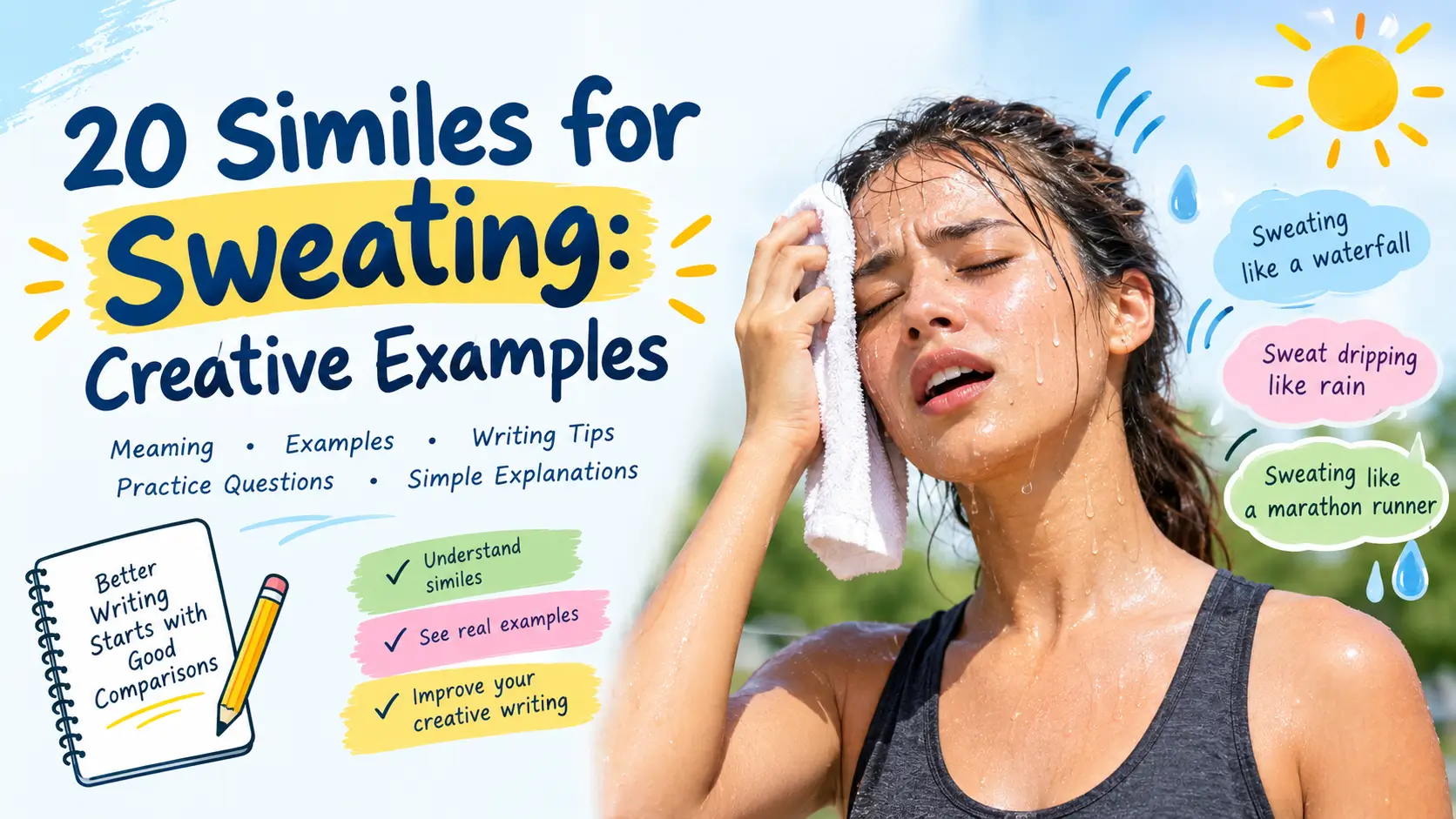
Sweating is a normal body response, but describing it in writing can be tricky. Simply saying someone was “sweating a lot” tells the reader what happened, but it does not create a strong picture. This is where similes can help. Similes compare one thing to another using words such as “like” or “as.” They can turn an ordinary description into something vivid, funny, dramatic, or memorable.
If you are looking for similes for sweating, you can compare sweat to rain, water, beads, streams, or other familiar things. These comparisons help readers imagine how much someone is sweating and why. For example, saying “sweat rolled down his face like rain on a window” creates a clearer image than simply saying “he was sweating.”
In this article, you will find 20 creative examples of similes for sweating, along with their meanings and sample sentences. You will also learn how to create your own similes, understand the difference between similes and metaphors, and practice with simple exercises. Let’s explore some descriptive writing examples you can use in stories, poems, and everyday writing.
20 Similes for Sweating
1. Sweating like a waterfall
Meaning: This means someone is sweating heavily, with sweat flowing freely.
What it conveys: It creates a strong image of a large amount of sweat pouring down the body.
Example sentences:
- After running five miles, Jake was sweating like a waterfall.
- She came inside from the blazing heat, sweating like a waterfall.
2. Sweating like a pig
Meaning: This is a common expression for sweating heavily.
What it conveys: It gives the description a casual and slightly humorous tone.
Example sentences:
- I was sweating like a pig after carrying those heavy boxes upstairs.
- He was sweating like a pig during the hot summer game.
3. Sweat dripping like rain
Meaning: Sweat is falling from the body in many drops, similar to rainfall.
What it conveys: It creates a clear image of steady, noticeable sweating.
Example sentences:
- Sweat was dripping like rain from her forehead.
- After the race, sweat fell from his face like rain.
4. Sweating like a melting snowman
Meaning: Someone is sweating so much that the comparison suggests they are melting.
What it conveys: It creates a funny and imaginative picture of extreme heat.
Example sentences:
- I stood outside for ten minutes, sweating like a melting snowman.
- In the crowded gym, everyone was sweating like melting snowmen.
5. Sweat shining like tiny pearls
Meaning: Small drops of sweat appear on the skin like pearls.
What it conveys: This simile creates a gentle and visual description rather than suggesting extreme sweating.
Example sentences:
- Tiny drops of sweat shone like pearls across her forehead.
- Sweat glistened like tiny pearls on his face after the workout.
6. Sweating like rain in a storm
Meaning: This describes very heavy sweating.
What it conveys: The comparison suggests that sweat is coming down quickly and continuously.
Example sentences:
- By the end of the basketball game, he was sweating like rain in a storm.
- She was sweating like rain in a storm after dancing for an hour.
7. Sweat running like a stream
Meaning: Sweat is flowing down the skin in continuous lines.
What it conveys: It gives the reader a strong sense of movement and quantity.
Example sentences:
- Sweat ran like a stream down his back.
- After the hike, sweat was running like a stream down her face.
8. Sweating like a marathon runner
Meaning: Someone is sweating heavily, similar to a person who has been running for a long time.
What it conveys: It suggests physical effort, heat, or exhaustion.
Example sentences:
- I was sweating like a marathon runner after chasing the bus.
- He stood in the kitchen, sweating like a marathon runner while cooking in the heat.
9. Sweat rolling like beads of water
Meaning: Sweat forms drops that roll across the skin.
What it conveys: It creates a detailed picture of individual drops of sweat.
Example sentences:
- Sweat rolled like beads of water down her cheeks.
- Beads of sweat rolled like drops of water across his forehead.
10. Sweating like an athlete under the sun
Meaning: This describes heavy sweating caused by exercise and heat.
What it conveys: It suggests both effort and strong sunlight.
Example sentences:
- We were sweating like athletes under the sun while moving the furniture.
- He was sweating like an athlete under the afternoon sun.
11. Sweat pouring like water from a tap
Meaning: Sweat is flowing heavily and continuously.
What it conveys: It makes the amount of sweat easy to imagine.
Example sentences:
- Sweat poured like water from a tap as he finished the difficult workout.
- By noon, sweat was pouring like water from a tap.
12. Sweating like a candle in the sun
Meaning: Someone is sweating because they are exposed to intense heat.
What it conveys: This is a playful comparison that makes the person seem overwhelmed by the heat.
Example sentences:
- I was sweating like a candle in the sun while waiting for the bus.
- The children were sweating like candles in the sun during the outdoor practice.
13. Sweat sparkling like morning dew
Meaning: Small drops of sweat are visible and shining on the skin.
What it conveys: It gives sweating a softer, more beautiful image.
Example sentences:
- Sweat sparkled like morning dew across her forehead.
- Tiny drops of sweat shone like morning dew after his morning run.
14. Sweating like a racehorse
Meaning: Someone is sweating heavily after intense physical activity.
What it conveys: It suggests speed, effort, energy, and exhaustion.
Example sentences:
- After sprinting across the field, he was sweating like a racehorse.
- She finished the exercise session sweating like a racehorse.
15. Sweat flowing like a river
Meaning: A large amount of sweat is flowing continuously.
What it conveys: It emphasizes heavy sweating and creates a dramatic visual image.
Example sentences:
- Sweat flowed like a river down his face.
- After hours of work in the heat, sweat was flowing like a river down her neck.
16. Sweating like ice cream on a hot day
Meaning: Someone is sweating heavily because of intense heat.
What it conveys: It creates a funny and easy-to-understand image of something struggling in the heat.
Example sentences:
- I was sweating like ice cream on a hot day during the summer festival.
- Without a fan, we were sweating like ice cream on a hot day.
17. Sweat covering his face like a wet blanket
Meaning: Sweat has spread across someone’s face in a noticeable layer.
What it conveys: It creates a strong image of uncomfortable, heavy sweating.
Example sentences:
- Sweat covered his face like a wet blanket after the exhausting climb.
- A layer of sweat rested on her skin like a wet blanket.
18. Sweating like a runner at the finish line
Meaning: Someone is sweating heavily after intense effort.
What it conveys: It suggests exhaustion and the final stage of demanding activity.
Example sentences:
- After moving all the boxes, I was sweating like a runner at the finish line.
- He was sweating like a runner at the finish line after the long workout.
19. Sweat trickling like a tiny stream
Meaning: Sweat is slowly moving down the skin.
What it conveys: It gives a calmer, more detailed description of light or moderate sweating.
Example sentences:
- Sweat trickled like a tiny stream down her cheek.
- A thin line of sweat moved like a tiny stream along his forehead.
20. Sweating like the sun itself
Meaning: This is a highly imaginative comparison for someone sweating intensely in great heat.
What it conveys: It creates an exaggerated, humorous image of extreme heat and sweating.
Example sentences:
- After working outside all afternoon, I was sweating like the sun itself.
- He walked into the house sweating like the sun itself after the long hike.
How to Use Similes in Writing
Creating your own similes can be simple. Start with the thing you want to describe, then think of something familiar that shares a similar quality.
Here is an easy process:
- Choose what you are describing.
For example, you might want to describe heavy sweating. - Identify the main quality.
Ask yourself whether the sweating is heavy, light, slow, sudden, funny, or caused by heat. - Find a familiar comparison.
Heavy sweat might remind you of rain, a waterfall, or a flowing stream. - Use “like” or “as.”
For example: “Sweat fell like rain.” - Make the image clear.
The reader should understand why the comparison works. - Match the tone.
A funny story might use “sweating like ice cream on a hot day,” while a serious story may use “sweat flowed like a river.” - Add sensory details.
Think about what the character sees, feels, or notices.
For example:
- Basic: “He was sweating.”
- Better: “Sweat rolled down his forehead like tiny beads.”
- More vivid: “Sweat streamed down his face like rain during a storm.”
The goal is not to make every sentence fancy. Use creative writing similes when they add a useful picture or feeling.
What Is a Simile?
A simile is a type of figurative language that compares two different things to make a description clearer or more vivid.
Similes often use words such as like or as.
For example:
- “Her face was red like a tomato.”
- “The baby slept like a log.”
- “Sweat fell from his forehead like rain.”
In each example, the writer connects one thing to another familiar thing. This helps the reader imagine the scene.
The meaning of similes is usually easy to understand because the comparison points to a shared quality. Someone who is “sweating like a waterfall” is not literally a waterfall. The phrase simply suggests that the person is sweating heavily.
You may also come across unusual phrases such as “strohl simile.” This is not a standard literary term for a recognized type of simile. If someone uses that phrase, they may simply be referring to a particular example or may have misspelled another term.
Simile vs. Metaphor
Both similes and metaphors make comparisons, but they do it differently.
Simile: “The room smelled like rotten eggs.”
Metaphor: “The room was a rotten-egg factory.”
The simile uses like to make the comparison directly. The metaphor says one thing is another thing without using “like” or “as.”
Here is another simple example:
- Simile: “The sweat was like rain.”
- Metaphor: “The sweat was rain.”
For beginners, remember this simple rule: a simile usually says something is like something else, while a metaphor describes something as something else.
Practical Exercise: 10 Questions
- Fill in the blank: “Sweat rolled down his face like ______.”
- Identify the simile: Which sentence contains a simile?
A. Maya was sweating after the race.
B. Maya was tired and thirsty.
C. Maya was sweating like a waterfall. - Fill in the blank: “The drops of sweat sparkled like ______.”
- Multiple choice: Which comparison best describes very heavy sweating?
A. Sweat like a dry leaf
B. Sweat like a waterfall
C. Sweat like a quiet cloud - Identify the simile: Is this a simile? “He was sweating like a marathon runner.” Explain your answer.
- Create your own simile: Complete this sentence: “After running outside, I was sweating like ______.”
- Compare two sentences: Which sentence creates a stronger image?
A. “He was sweating.”
B. “Sweat streamed down his face like rain.” - Multiple choice: Which word is commonly used to introduce a simile?
A. Because
B. Like
C. Therefore - Create your own simile: Write a simile describing someone sweating on an extremely hot day.
- Improve the sentence: Turn “She was sweating a lot” into a more vivid sentence using a simile.
Answers and Explanations
- Possible answer: “Sweat rolled down his face like rain.”
Explanation: Rain falls in many drops, making it a natural comparison for sweat. - Answer: C. Maya was sweating like a waterfall.
Explanation: The word “like” connects sweating with a waterfall, creating a comparison. - Possible answer: “The drops of sweat sparkled like pearls.”
Explanation: Pearls are small, round, and shiny, making them a useful comparison for visible drops of sweat. - Answer: B. Sweat like a waterfall.
Explanation: A waterfall suggests a large amount of flowing water, so it creates an image of heavy sweating. - Answer: Yes.
Explanation: The sentence compares the person’s sweating to that of a marathon runner using the word “like.” - Possible answer: “After running outside, I was sweating like a racehorse.”
Explanation: A racehorse suggests speed, effort, and physical activity, which fit the situation. - Answer: B. “Sweat streamed down his face like rain.”
Explanation: The second sentence uses a simile and gives the reader a clearer visual image. - Answer: B. Like.
Explanation: “Like” is one of the most common signal words used in similes. - Possible answer: “I was sweating like ice cream on a hot day.”
Explanation: The comparison creates a playful image of someone struggling with intense heat. - Possible answer: “She was sweating like a waterfall after the long workout.”
Explanation: The comparison gives the reader a stronger sense of how much she was sweating.
Conclusion
Similes can make simple descriptions much more vivid. Instead of only saying that someone is sweating, you can show the reader what it looks or feels like. Comparing sweat to rain, a waterfall, beads of water, or a flowing stream gives the reader a clearer mental picture.
The 20 similes for sweating in this guide can help you write stronger stories, poems, school assignments, and other creative writing. Remember that a good simile does not need to be complicated. It only needs to create a clear and useful comparison.
When writing your own simile, think about the amount of sweat, the reason for it, and the mood of the scene. Then choose a familiar image that matches. Keep practicing, and your descriptive writing will become more colorful and engaging.

I am Silas Michael, an enthusiastic writer passionate about similes, metaphors, and idioms. I enjoy explaining creative expressions through simple meanings and examples that help readers understand and improve their English.