Have you ever heard a sound that was so strong, soft, strange, or beautiful that you wanted to describe it? Maybe rain sounded like tiny drums on the roof. Perhaps a baby’s laugh was like little bells. That is where similes for sounds can make your writing much more interesting.
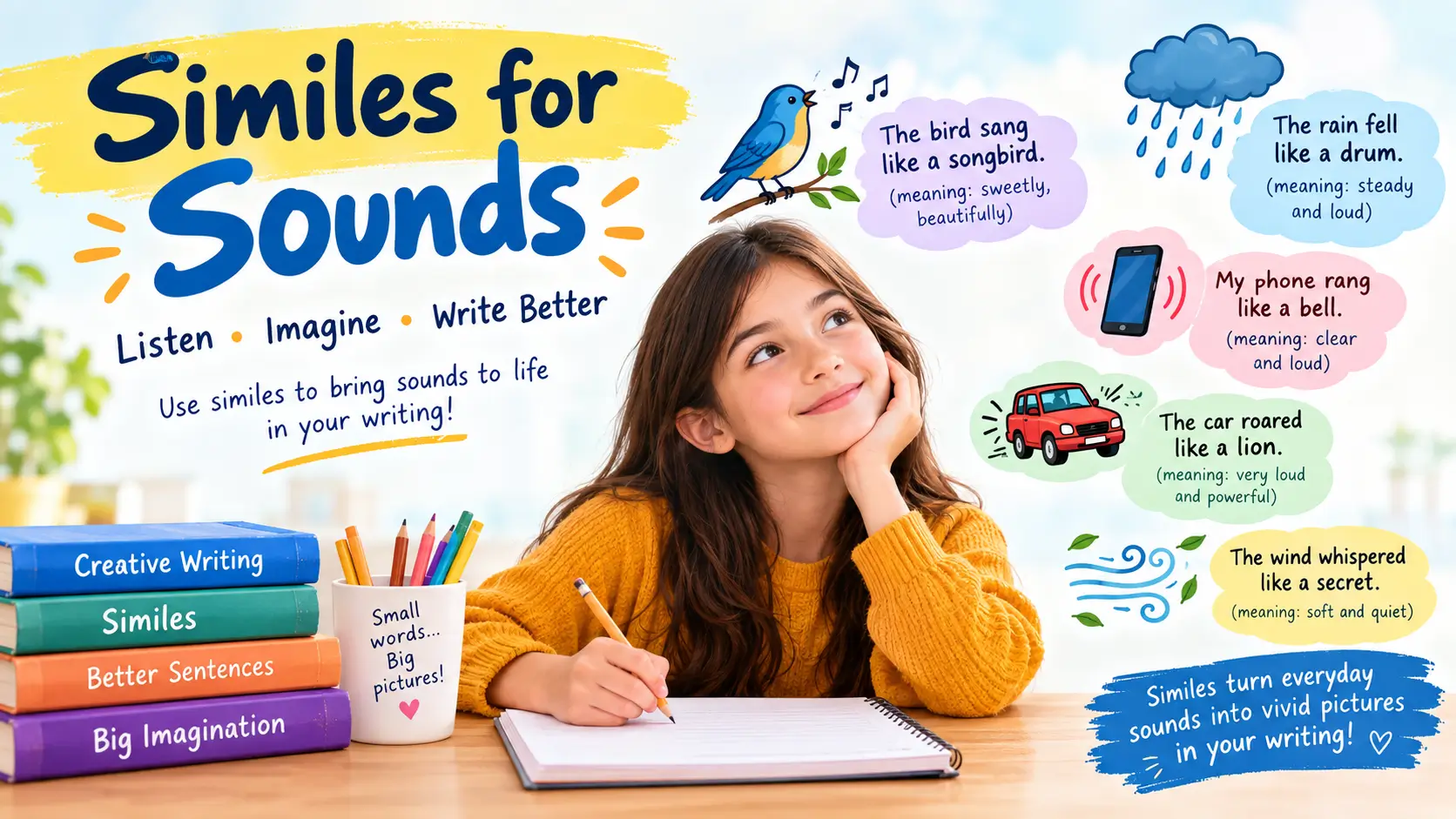
A simile compares two different things using words such as “like” or “as.” Instead of saying, “The wind was quiet,” you might say, “The wind whispered like a secret.” Now the reader can almost hear it.
In simple terms, similes help readers hear, see, feel, and imagine what you are describing. They are especially useful in stories, poems, songs, and creative writing.
In this guide, let’s explore 20 examples of similes for sounds. You will see the meaning of each one, how it works, and two simile sentences for practice. By the end, you will also learn how to create your own.
Quick note: The phrase “strohl simile” is not a standard literary term. If you came across it in a search, it may be a typo or a reference to a particular source. The standard term is simply simile.
20 Similes for Sounds
1. The sound was like crashing thunder.
Meaning: The sound was very loud and powerful.
What it conveys: This simile creates a feeling of sudden noise and strength.
Examples:
- The drums sounded like crashing thunder across the stadium.
- His shout was like crashing thunder in the quiet room.
2. Her voice was as soft as a whisper.
Meaning: Her voice was very quiet and gentle.
What it conveys: It gives the reader a sense of calm and softness.
Examples:
- Her voice was as soft as a whisper when she told the secret.
- The singer’s voice was as soft as a whisper at the end of the song.
3. The rain sounded like tiny drums.
Meaning: The raindrops made a steady tapping sound.
What it conveys: It makes ordinary rainfall feel musical.
Examples:
- Rain tapped on the window like tiny drums.
- The storm sounded like tiny drums beating on the roof.
4. The baby laughed like a ringing bell.
Meaning: The baby’s laugh was bright, clear, and cheerful.
What it conveys: It creates a happy and pleasant sound.
Examples:
- The baby laughed like a ringing bell.
- Her giggle rang like a little bell through the house.
5. The wind whispered like a secret.
Meaning: The wind made a soft, quiet sound.
What it conveys: This gives the wind a mysterious and gentle quality.
Examples:
- The wind whispered like a secret through the trees.
- At night, the breeze sounded like a secret being shared.
6. The car roared like a lion.
Meaning: The car made a deep, powerful, loud sound.
What it conveys: It makes the vehicle seem strong and fierce.
Examples:
- The old car roared like a lion when it started.
- The racing car sounded like a lion charging across the track.
7. The leaves rustled like silk.
Meaning: The leaves made a soft, smooth sound.
What it conveys: This creates a peaceful picture of nature.
Examples:
- The leaves rustled like silk in the evening breeze.
- Dry leaves moved like silk beneath her feet.
8. The door slammed like a cannon.
Meaning: The door made a sudden, extremely loud bang.
What it conveys: It shows how startling the sound was.
Examples:
- The door slammed like a cannon during the storm.
- Behind me, the classroom door closed like a cannon blast.
9. The alarm rang like a siren.
Meaning: The alarm was loud and difficult to ignore.
What it conveys: It creates a sense of urgency.
Examples:
- My alarm rang like a siren before sunrise.
- The fire alarm sounded like a siren throughout the building.
10. The stream murmured like a quiet song.
Meaning: The water made a soft, pleasant sound.
What it conveys: It gives nature a peaceful, musical feeling.
Examples:
- The stream murmured like a quiet song beside the path.
- We relaxed while the water murmured like a quiet song.
11. The thunder boomed like a giant drum.
Meaning: Thunder made a deep, loud sound.
What it conveys: It makes the storm feel huge and powerful.
Examples:
- Thunder boomed like a giant drum above us.
- The storm rolled in, booming like a giant drum.
12. The clock ticked like tiny footsteps.
Meaning: The clock made small, repeated sounds.
What it conveys: It creates a quiet and slightly mysterious mood.
Examples:
- The clock ticked like tiny footsteps in the empty room.
- At midnight, the clock sounded like tiny footsteps.
13. The crowd roared like a wild ocean.
Meaning: The crowd made a huge, powerful noise.
What it conveys: It shows excitement and overwhelming energy.
Examples:
- The crowd roared like a wild ocean when the team scored.
- Fans shouted like a wild ocean around the players.
14. The piano sounded like falling rain.
Meaning: The piano notes were soft, flowing, and gentle.
What it conveys: It creates a peaceful musical image.
Examples:
- Her piano notes sounded like falling rain.
- The melody moved like falling rain against the window.
15. The child’s scream was like a sharp whistle.
Meaning: The scream was high, sharp, and piercing.
What it conveys: It helps the reader imagine an uncomfortable, sudden sound.
Examples:
- The child’s scream was like a sharp whistle.
- His cry cut through the room like a sharp whistle.
16. The birds sang like a cheerful choir.
Meaning: Many birds were making beautiful sounds together.
What it conveys: It makes the morning feel lively and joyful.
Examples:
- The birds sang like a cheerful choir at sunrise.
- Outside my window, the birds sounded like a cheerful choir.
17. The old floor creaked like a rusty gate.
Meaning: The floor made an unpleasant, squeaky sound.
What it conveys: It can create a spooky or old-fashioned mood.
Examples:
- The floor creaked like a rusty gate beneath my feet.
- Every step sounded like a rusty gate opening.
18. The waves crashed like breaking glass.
Meaning: The waves made a sharp, powerful crashing sound.
What it conveys: It creates a vivid picture of rough water.
Examples:
- The waves crashed like breaking glass against the rocks.
- Outside, the sea sounded like breaking glass.
19. The laughter spread like a ringing melody.
Meaning: The laughter was pleasant and seemed to fill the area.
What it conveys: It creates a warm, joyful feeling.
Examples:
- Their laughter spread like a ringing melody through the garden.
- Her laughter floated through the room like a ringing melody.
20. The train rumbled like distant thunder.
Meaning: The train made a deep, low, rolling sound.
What it conveys: It helps the reader imagine a train approaching from far away.
Examples:
- The train rumbled like distant thunder in the night.
- From across the valley came a sound like distant thunder.
How to Use Similes for Sounds in Writing
Knowing examples of similes is useful, but knowing how to use similes in writing is even better.
Start by listening carefully.
Ask yourself:
- Is the sound loud or quiet?
- Is it sharp or soft?
- Is it high or low?
- Is it fast or slow?
- Is it pleasant or unpleasant?
- What does the sound remind me of?
For example, imagine a pencil tapping on a desk.
You could simply write:
The pencil tapped on the desk.
That is clear, but not very vivid.
Now try a creative writing simile:
The pencil tapped like a tiny clock.
Suddenly, the reader can imagine the repeated sound.
You might say:
The pencil tapped like nervous footsteps.
Now the sentence also creates a mood.
That is the power of a good simile.
10-Question Practical Exercise
Try these questions before looking at the answers.
1. Complete the simile:
The thunder sounded like __________.
2. Which simile best describes a soft wind?
A. The wind roared like a lion.
B. The wind whispered like a secret.
C. The wind crashed like thunder.
3. Complete the sentence:
The rain tapped on the roof like __________.
4. Identify the simile:
“The car roared like a lion.”
What two things are being compared?
5. Choose the best simile for birds singing:
A. like a cheerful choir
B. like a crashing door
C. like a heavy hammer
6. Complete the simile:
The clock ticked like __________.
7. Is this a simile?
“The waves crashed like breaking glass.”
Yes or No?
8. Choose a simile for a loud crowd:
A. like a sleeping kitten
B. like a wild ocean
C. like falling snow
9. Make your own simile:
The baby laughed like __________.
10. Improve this sentence with a simile:
“The door slammed loudly.”
Answers and Explanations
1. The thunder sounded like crashing thunder.
Example answer: “The thunder sounded like a giant drum.”
This compares thunder with a giant drum to show its deep, powerful sound.
2. B. The wind whispered like a secret.
The word “whispered” suggests a soft and quiet sound.
3. “The rain tapped on the roof like tiny drums.”
This compares raindrops with drums because both make repeated tapping sounds.
4. The car is compared with a lion.
The word “like” signals the comparison. The comparison makes the car seem loud and powerful.
5. A. like a cheerful choir
A choir is made up of people singing together, so it works well for many birds singing.
6. “The clock ticked like tiny footsteps.”
The repeated ticking can remind us of small footsteps.
7. Yes.
The word “like” compares the sound of waves with breaking glass.
8. B. like a wild ocean
This shows that the crowd is extremely loud and full of energy.
9. Answers will vary.
For example:
“The baby laughed like a ringing bell.”
This suggests a bright, clear, happy sound.
10. Example answer:
“The door slammed like a cannon.”
This makes the sound feel sudden, powerful, and very loud.
How to Create Your Own Sound Similes
Creating original similes is easier than it may seem.
Use this simple pattern:
Sound + like/as + something with a similar quality
For example:
The guitar sounded like a singing bird.
The guitar and bird are different, but both can create beautiful sounds.
You can also think about the emotion behind the sound.
A happy sound might be:
Her laughter was like sunshine with a voice.
A scary sound might be:
The footsteps sounded like a warning in the dark.
A quiet sound might be:
The leaves moved like pages turning.
The best similes do more than describe sound. They also create a mood, picture, or feeling.
Common Mistakes to Avoid
When writing simile sentences, keep these tips in mind:
1. Do not force the comparison.
Choose something that truly matches the sound.
2. Avoid using the same comparison too often.
If every loud sound is “like thunder,” your writing may become repetitive.
3. Think beyond volume.
Sounds can be:
- soft
- sharp
- deep
- bright
- smooth
- rough
- gentle
- eerie
- cheerful
- sudden
4. Keep your similes clear.
A reader should understand why the two things are being compared.
5. Use similes to add meaning.
A strong simile should help the reader experience the scene rather than simply decorate the sentence.
Conclusion
Similes are simple tools, but they can make your writing much more vivid. When you compare a sound to something familiar, readers can almost hear the scene in their minds. A storm can boom like a giant drum. Leaves can rustle like silk. A bird can sing like a cheerful choir.
The key is to listen closely and notice what each sound makes you think or feel. Then choose a comparison that fits.
Now that you know these similes for sounds, try creating five of your own. Listen to sounds around you and ask, “What does this sound like?” That one question can lead to some wonderful creative writing ideas.

I’m Evelyn Marie, an author passionate about similes, metaphors, and idioms. I enjoy explaining creative expressions simply, helping readers understand language and make their writing more engaging.