Have you ever watched a river move through a quiet forest or rush over rocks after heavy rain? A river can be calm, wild, bright, dark, noisy, or peaceful. A good simile helps you show those details instead of simply telling your reader about them.
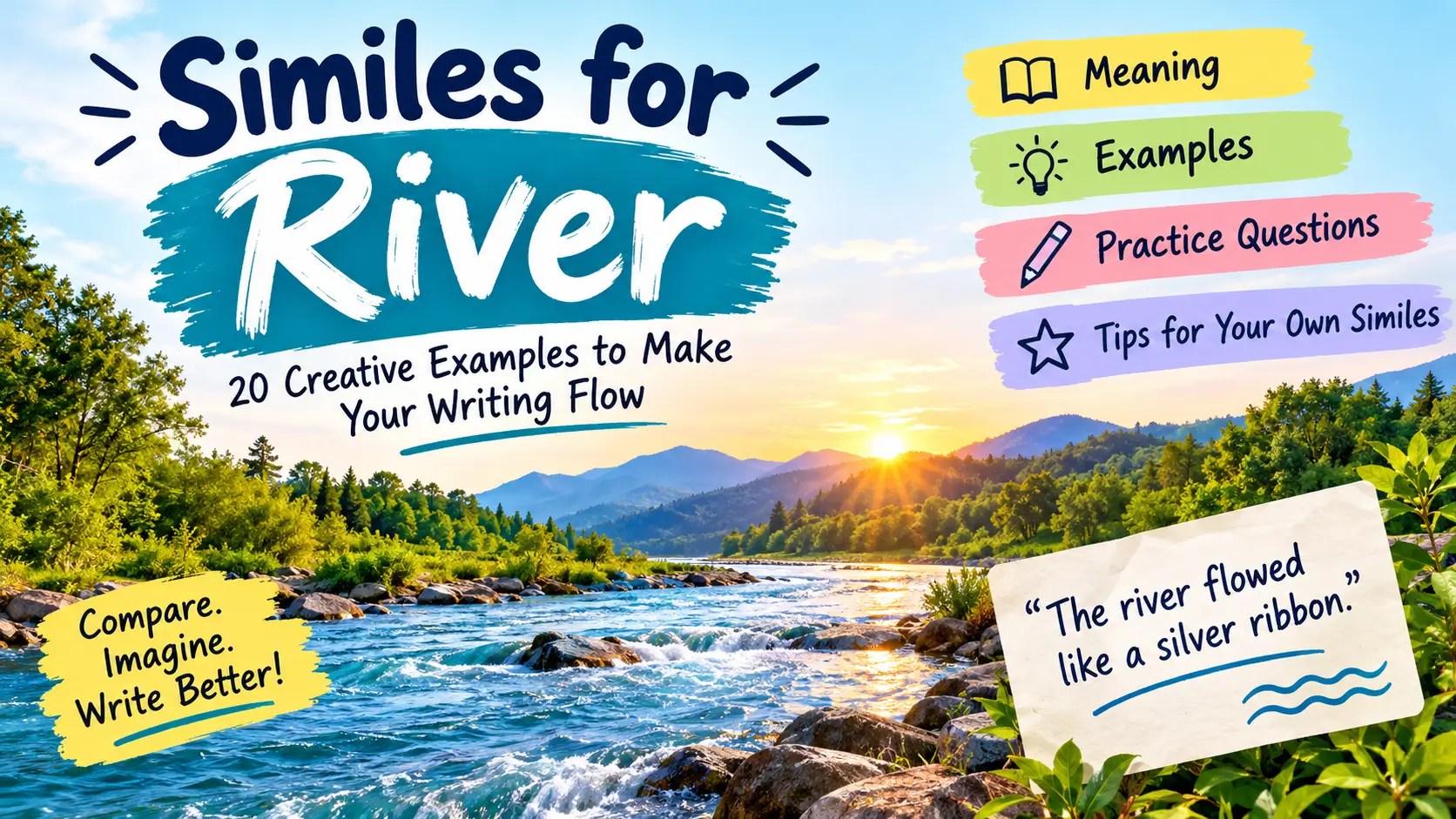
A simile compares two different things using words such as “like” or “as.” For example, you might say, “The river flowed like a silver ribbon.” The river is not really a ribbon, but the comparison helps us picture its long, shining shape.
Using similes can make your writing more colorful and memorable. They are useful in stories, poems, essays, and creative writing.
In simple terms, similes help readers see, hear, and feel what you describe. So, if you are looking for similes for river, let’s explore some creative examples you can use or adapt in your own writing.
Quick note: If you have seen the phrase “strohl simile,” it is not a standard literary term. You may simply mean a regular simile or a specific type of comparison.
20 Similes for River
Here are 20 creative river similes, along with their meanings and examples.
1. The river flowed like a silver ribbon.
Meaning: The river looked long, narrow, and shiny.
This simile creates a peaceful picture of a river sparkling in the sunlight.
Example sentences:
- The river flowed like a silver ribbon through the green valley.
- At sunset, the river looked like a silver ribbon beneath the orange sky.
2. The river rushed like a wild horse.
Meaning: The river moved quickly and powerfully.
This comparison makes the river seem energetic, strong, and difficult to control.
Example sentences:
- After the storm, the river rushed like a wild horse.
- The river raced through the canyon like a wild horse.
3. The river was as calm as glass.
Meaning: The river was very still and peaceful.
This is a useful simile for a quiet river with almost no movement.
Example sentences:
- Early in the morning, the river was as calm as glass.
- The boat moved slowly across the river, which was as calm as glass.
4. The river sparkled like a necklace of diamonds.
Meaning: Sunlight made the water shine brightly.
The comparison gives the river a beautiful, precious appearance.
Example sentences:
- Under the morning sun, the river sparkled like a necklace of diamonds.
- The little river sparkled like a necklace of diamonds between the hills.
5. The river twisted like a snake.
Meaning: The river curved and turned many times.
This simile is great for describing a winding river.
Example sentences:
- The river twisted like a snake through the forest.
- From the hilltop, we could see the river twisting like a snake below us.
6. The river roared like a lion.
Meaning: The river made a loud, powerful sound.
This works especially well for a fast river, waterfall, or river after heavy rain.
Example sentences:
- The river roared like a lion after the storm.
- We could hear the river roaring like a lion from far away.
7. The river moved like a dancer.
Meaning: The river moved smoothly and gracefully.
This creates a gentle and artistic image.
Example sentences:
- The river moved like a dancer around the rocks.
- In the moonlight, the river moved like a dancer beneath the bridge.
8. The river was as blue as the sky.
Meaning: The river had a bright blue color.
This simile connects the color of the water with the sky above it.
Example sentences:
- On that clear morning, the river was as blue as the sky.
- The mountain river looked as blue as the sky.
9. The river flowed like a lazy cat.
Meaning: The river moved slowly and quietly.
This is a playful way to describe a slow-moving river.
Example sentences:
- On the warm afternoon, the river flowed like a lazy cat.
- The wide river moved like a lazy cat through the peaceful countryside.
10. The river was as smooth as silk.
Meaning: The surface of the river was very smooth.
This simile suggests beauty, softness, and calmness.
Example sentences:
- At dawn, the river was as smooth as silk.
- The moon reflected on water that was as smooth as silk.
11. The river rushed like a speeding train.
Meaning: The river moved extremely fast.
This comparison gives a strong feeling of speed and force.
Example sentences:
- The river rushed like a speeding train after the rain.
- We stood safely on the bank as the river rushed like a speeding train.
12. The river whispered like a secret.
Meaning: The river made a soft, quiet sound.
This is a strong choice for peaceful stories and nature poems.
Example sentences:
- At night, the river whispered like a secret.
- We sat beside the river as it whispered like a secret in the darkness.
13. The river glittered like scattered stars.
Meaning: Small patches of light shone across the water.
This creates a magical nighttime or sunset image.
Example sentences:
- Under the moon, the river glittered like scattered stars.
- The sunlight made the river glitter like scattered stars.
14. The river curled like a sleeping snake.
Meaning: The river formed gentle curves across the land.
The word “sleeping” makes the river seem quiet and still.
Example sentences:
- The river curled like a sleeping snake around the village.
- From above, the river curled like a sleeping snake through the valley.
15. The river was as cold as ice.
Meaning: The river water was extremely cold.
This is useful when describing mountain rivers or winter scenes.
Example sentences:
- The mountain river was as cold as ice.
- His feet felt numb because the river was as cold as ice.
16. The river danced like a ribbon in the wind.
Meaning: The river moved and curved gracefully.
This gives the river a lively and beautiful quality.
Example sentences:
- The river danced like a ribbon in the wind between the hills.
- In the distance, the river danced like a ribbon across the valley.
17. The river thundered like a drum.
Meaning: The river made a deep, loud, repeated sound.
This is especially effective for rough water and strong currents.
Example sentences:
- The river thundered like a drum beneath the bridge.
- After the storm, the river thundered like a drum through the canyon.
18. The river stretched like a long blue road.
Meaning: The river extended far into the distance.
This comparison helps readers imagine the river’s length and direction.
Example sentences:
- The river stretched like a long blue road toward the mountains.
- From the hill, the river stretched like a long blue road across the land.
19. The river flowed as gently as a lullaby.
Meaning: The river moved quietly and peacefully.
This simile connects the river’s soft movement with the calming sound of a lullaby.
Example sentences:
- The river flowed as gently as a lullaby beside the village.
- At sunset, the river flowed as gently as a lullaby.
20. The river was like a mirror.
Meaning: The river reflected the sky, trees, mountains, or other objects around it.
This simple simile is excellent for calm water.
Example sentences:
- The quiet river was like a mirror, reflecting the mountains.
- At dawn, the river was like a mirror beneath the pale sky.
How to Use Similes in River Writing
Now that you have seen these examples of similes, how do you create your own?
Start by thinking about what the river is doing.
Is it:
- Moving slowly?
- Rushing quickly?
- Making a loud sound?
- Shining in sunlight?
- Reflecting the sky?
- Curving through a valley?
- Flowing peacefully?
Then think of something familiar that has the same quality.
For example:
River + fast → cheetah
You might say:
“The river rushed like a cheetah chasing its prey.”
Or:
River + quiet → whisper
You might say:
“The river was as quiet as a whisper.”
This is a simple way to create creative writing similes that feel natural.
Remember, the best similes do more than decorate a sentence. They help your reader imagine the scene.
Practical Exercise: Similes for River
Try these 10 questions before checking the answers.
1. Complete the simile:
The river flowed like a ________.
Answer: ribbon
Explanation: A ribbon is long and flexible, making it a good comparison for a winding river.
2. Complete the simile:
The river was as calm as ________.
Answer: glass
Explanation: Glass has a smooth surface, so it can describe still water.
3. Which is a simile?
A. The river is a snake.
B. The river twisted like a snake.
C. The river twisted through the forest.
Answer: B
Explanation: The word “like” makes the comparison a simile.
4. What does this simile mean?
“The river roared like a lion.”
Answer: The river was very loud and powerful.
Explanation: A lion’s roar is strong and loud, so the comparison gives the river a powerful sound.
5. Complete the simile:
The river sparkled like ________.
Answer: diamonds
Explanation: Diamonds are bright and shiny, so this comparison shows how the water reflected light.
6. Is this a simile?
“The river was a silver ribbon.”
Answer: No.
Explanation: This is a metaphor because it directly says the river was a ribbon. A simile would say, “The river was like a silver ribbon.”
7. Create a simile for a fast river.
Sample answer:
The river rushed like a speeding train.
Explanation: A speeding train is fast and powerful, making it a strong comparison.
8. Create a simile for a quiet river.
Sample answer:
The river whispered like a secret.
Explanation: A secret can be whispered softly, so the comparison creates a quiet mood.
9. What does this simile describe?
“The river was as smooth as silk.”
Answer: The smooth surface of the water.
Explanation: Silk is known for its soft, smooth texture.
10. Complete your own simile:
The river moved like __________.
Sample answer:
The river moved like a graceful dancer.
Explanation: A dancer can move smoothly and gracefully, making this a vivid comparison for flowing water.
Tips for Creating Your Own Simile Sentences
Creating original similes does not have to be hard. Try these simple steps:
1. Notice the river.
Look closely at its movement, sound, color, and shape.
2. Pick one quality.
Maybe the river is fast, quiet, bright, dark, or winding.
3. Find something familiar.
Ask yourself what else has that same quality.
4. Add “like” or “as.”
For example:
Quiet river → sleeping baby
“The river was as quiet as a sleeping baby.”
5. Read your sentence aloud.
If it sounds natural and creates a clear picture, you have a useful simile.
Don’t worry about making every comparison perfect. Creative writing is about experimenting with ideas and finding fresh ways to describe ordinary things.
Conclusion
Similes are simple but powerful tools for creative writing. They allow you to compare one thing with another so readers can build a clearer picture in their minds. When writing about a river, you can compare it to a ribbon, snake, dancer, mirror, train, or even a lion.
The key is to think about the river’s movement, sound, color, shape, and mood. Then find something familiar that shares the same quality.
Whether you are writing a poem, story, school assignment, or nature description, these similes for river can help your words flow with more life and imagination.
Now it is your turn. Pick a river scene and create three new similes of your own. You might be surprised by how creative your comparisons can become!

I am Beau Thomas, the Administrator at SimilyHub. I enjoy making similes, metaphors, and idioms easy to understand through clear explanations, helpful examples, and engaging content for English learners and writers.