Have you ever walked into a room and thought, “What is that smell?” Sometimes, saying something simply “smells bad” does not fully show how awful the odor is. This is where similes for smelling bad can make your writing much more vivid.
A simile compares one thing to another using words such as “like” or “as.” For example, you might say, “The garbage smelled like rotten eggs.” The reader can almost imagine the smell right away.
Similes are useful in stories, poems, jokes, descriptions, and everyday writing. They help readers picture an experience instead of simply being told about it. In simple terms, a good simile turns a plain description into something memorable.
If you are learning creative writing, let’s explore some examples of similes for describing terrible smells. You will also see the meaning of similes, how they work in sentences, and how to create your own.
20 Similes for Smelling Bad
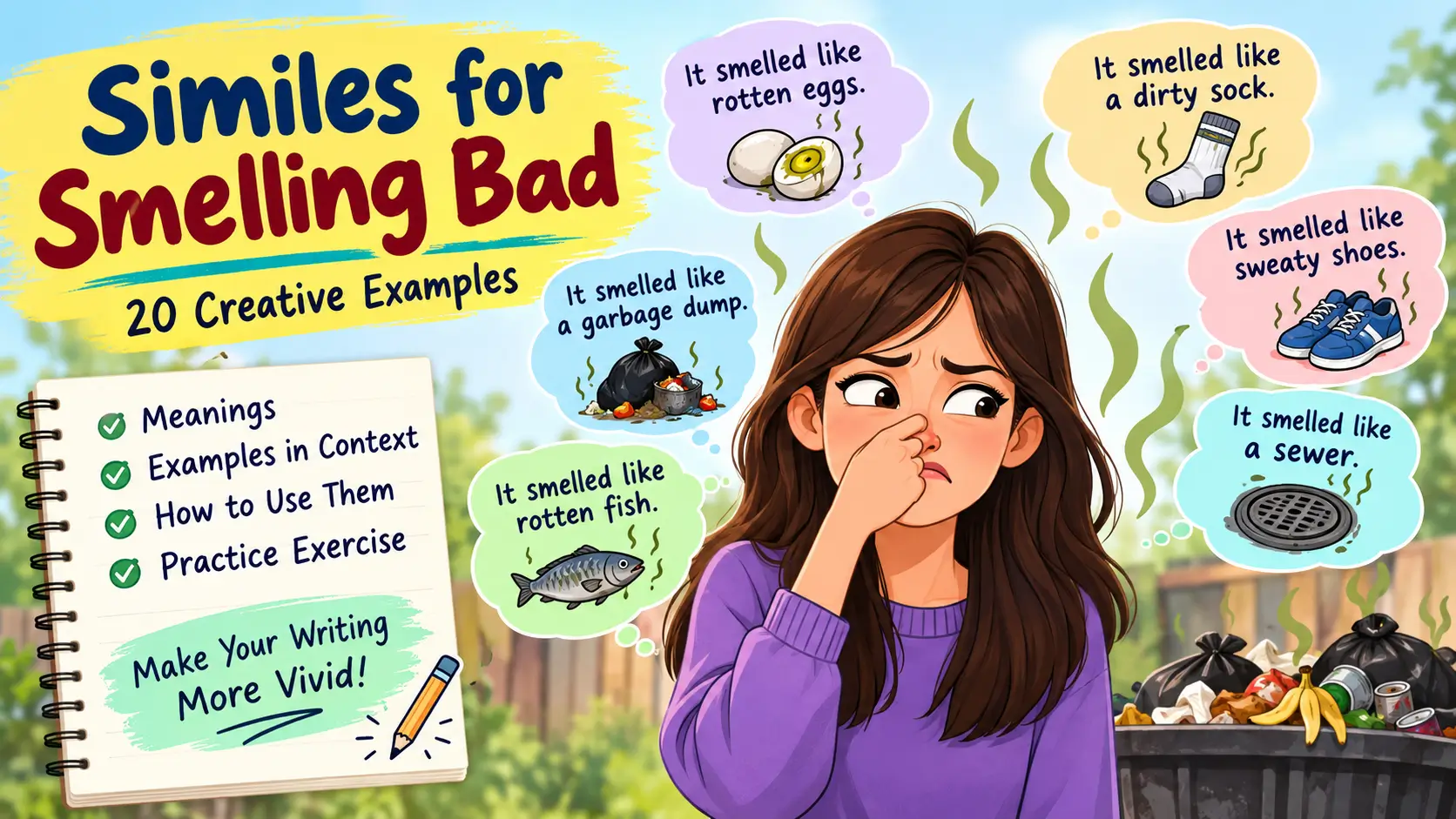
1. It smelled like rotten eggs.
Meaning: It had a very unpleasant, sulfur-like smell.
What it conveys: This simile compares a bad odor to the strong smell of rotten eggs.
Example sentences:
- The old drain smelled like rotten eggs.
- His forgotten lunch smelled like rotten eggs.
2. It smelled like a garbage dump.
Meaning: The smell was extremely unpleasant and dirty.
What it conveys: A garbage dump contains many different sources of strong odors, making it a useful comparison.
Example sentences:
- The overflowing trash can smelled like a garbage dump.
- After the storm, the alley smelled like a garbage dump.
3. It smelled like rotten fish.
Meaning: It had a strong, foul odor similar to spoiled fish.
What it conveys: This comparison makes the unpleasant smell easy for the reader to imagine.
Example sentences:
- The forgotten seafood smelled like rotten fish.
- The old bucket smelled like rotten fish.
4. It smelled as bad as spoiled milk.
Meaning: The odor was sour and unpleasant.
What it conveys: Spoiled milk has a familiar sour smell, so this simile gives readers an instant image.
Example sentences:
- The refrigerator smelled as bad as spoiled milk.
- The old bottle smelled as bad as spoiled milk.
5. It smelled like a dirty sock.
Meaning: It had a stale, sweaty, unpleasant odor.
What it conveys: This is a simple and slightly funny comparison that works well in casual writing.
Example sentences:
- The gym bag smelled like a dirty sock.
- His wet shoes smelled like a dirty sock.
6. It smelled like something had died.
Meaning: The odor was extremely foul and disturbing.
What it conveys: This simile creates a strong image of a powerful, unpleasant smell.
Example sentences:
- The basement smelled like something had died.
- When we opened the box, it smelled like something had died.
7. It smelled like rotten cabbage.
Meaning: It had a strong and unpleasant vegetable-like odor.
What it conveys: The comparison makes the smell seem sharp, stale, and unpleasant.
Example sentences:
- The kitchen smelled like rotten cabbage.
- The old refrigerator smelled like rotten cabbage.
8. It smelled as foul as a sewer.
Meaning: It smelled extremely dirty and unpleasant.
What it conveys: A sewer is strongly associated with foul odors, making this a powerful comparison.
Example sentences:
- The blocked drain smelled as foul as a sewer.
- The bathroom smelled as foul as a sewer.
9. It smelled like sweaty shoes.
Meaning: It had a strong, stale, sweaty smell.
What it conveys: This simile creates a familiar and slightly humorous image.
Example sentences:
- The locker room smelled like sweaty shoes.
- His bedroom smelled like sweaty shoes after the game.
10. It smelled like old garbage.
Meaning: The smell was stale, dirty, and unpleasant.
What it conveys: This comparison gives the reader a quick picture of a strong trash odor.
Example sentences:
- The abandoned kitchen smelled like old garbage.
- The bin smelled like old garbage in the summer heat.
11. It smelled like a skunk.
Meaning: The odor was strong, sharp, and unpleasant.
What it conveys: Skunk odor is famous for being powerful, so this simile clearly shows how bad the smell was.
Example sentences:
- The hallway smelled like a skunk.
- Something outside smelled like a skunk.
12. It smelled like burnt rubber.
Meaning: It had a sharp, chemical-like odor.
What it conveys: This comparison works well when describing smoke, machines, or something that has overheated.
Example sentences:
- The garage smelled like burnt rubber.
- The machine began to smell like burnt rubber.
13. It smelled as bad as a forgotten lunchbox.
Meaning: It had a stale and disgusting food smell.
What it conveys: This is a humorous simile that works especially well in school or children’s writing.
Example sentences:
- The bag smelled as bad as a forgotten lunchbox.
- His backpack smelled as bad as a forgotten lunchbox.
14. It smelled like sour garbage.
Meaning: The odor was unpleasant, stale, and rotten.
What it conveys: This simile combines the ideas of sourness and decay to create a stronger image.
Example sentences:
- The alley smelled like sour garbage.
- The trash room smelled like sour garbage.
15. It smelled like wet dog.
Meaning: It had a musty, damp, unpleasant smell.
What it conveys: Wet dogs have a distinctive odor, making this a familiar comparison.
Example sentences:
- The carpet smelled like wet dog.
- After the rain, the room smelled like wet dog.
16. It smelled as foul as spoiled meat.
Meaning: The smell was extremely rotten and unpleasant.
What it conveys: Spoiled meat creates a strong mental picture of decay.
Example sentences:
- The refrigerator smelled as foul as spoiled meat.
- The abandoned shop smelled as foul as spoiled meat.
17. It smelled like an old pair of sneakers.
Meaning: The odor was sweaty, stale, and unpleasant.
What it conveys: This simile gives the description a relatable and slightly funny feeling.
Example sentences:
- The closet smelled like an old pair of sneakers.
- The sports bag smelled like an old pair of sneakers.
18. It smelled like a forgotten trash bag.
Meaning: The smell was stale, rotten, and unpleasant.
What it conveys: The comparison helps readers imagine trash that has been sitting around for too long.
Example sentences:
- The corner smelled like a forgotten trash bag.
- The storage room smelled like a forgotten trash bag.
19. It smelled as bad as a dirty drain.
Meaning: The odor was foul and unpleasant.
What it conveys: A dirty drain is a common source of unpleasant smells, so the comparison is easy to understand.
Example sentences:
- The sink smelled as bad as a dirty drain.
- The old pipe smelled as bad as a dirty drain.
20. The room smelled like a swamp on a hot day.
Meaning: The room had a musty, damp, and unpleasant odor.
What it conveys: This simile combines heat, moisture, and decay to create a vivid description.
Example sentences:
- After being closed for months, the room smelled like a swamp on a hot day.
- The basement smelled like a swamp on a hot day.
How to Use Similes in Writing
Now that you have plenty of examples, you might wonder how to make your own.
Start with the thing you want to describe. In this case, it is a bad smell.
Next, think about something familiar that has a similar smell. It could be rotten food, dirty socks, garbage, wet shoes, or a sewer.
Then connect the two ideas with “like” or “as.”
For example:
Bad smell + rotten fish = The kitchen smelled like rotten fish.
You can also make your similes more creative:
The basement smelled like a forgotten swamp trapped inside a box.
Good creative writing similes should help readers feel, see, hear, taste, or smell what you are describing. The goal is not to make the comparison complicated. The goal is to make it clear and memorable.
Practical Exercise: 10 Questions
Try these questions before checking the answers.
1. Complete the simile:
The garbage smelled like ________.
Answer: rotten eggs.
Explanation: Rotten eggs are famous for their strong, unpleasant smell.
2. Choose the best comparison:
“The gym bag smelled like…”
A. fresh flowers
B. sweaty shoes
C. clean water
Answer: B. sweaty shoes.
Explanation: Sweaty shoes are a familiar example of a bad smell.
3. Complete the sentence:
The old drain smelled as foul as a ________.
Answer: sewer.
Explanation: A sewer is strongly associated with foul odors.
4. Which sentence uses a simile?
A. The room smelled terrible.
B. The room smelled like rotten fish.
C. The room had a bad odor.
Answer: B.
Explanation: The word “like” connects the smell to another thing.
5. Create a simile for a terrible food smell.
Sample answer: The kitchen smelled like spoiled milk.
Explanation: Spoiled milk has a familiar sour smell, making the comparison easy to understand.
6. Complete the simile:
His shoes smelled like ________.
Answer: a dirty sock.
Explanation: A dirty sock is a simple and humorous comparison for an unpleasant odor.
7. Which is more vivid?
A. The basement smelled bad.
B. The basement smelled like something had died.
Answer: B.
Explanation: The second sentence gives the reader a stronger mental image.
8. Write a simile using “as bad as.”
Sample answer: The refrigerator smelled as bad as spoiled meat.
Explanation: The phrase “as bad as” directly compares the odor to spoiled meat.
9. Complete the simile:
After the rain, the room smelled like ________.
Answer: wet dog.
Explanation: Wet dogs have a familiar musty smell.
10. Create your own simile for a horrible smell.
Sample answer: The locker room smelled like an old pair of sneakers.
Explanation: The comparison uses a familiar unpleasant smell to make the description stronger.
What Is a “Strohl Simile”?
You may have seen the phrase “strohl simile” while searching for simile examples. “Strohl simile” is not a standard literary term or a commonly recognized type of simile.
If you are looking for the meaning of similes, the basic idea is simple: a simile compares two different things, usually with words such as “like” or “as.”
For example:
The room smelled like rotten eggs.
The smell is being compared to rotten eggs. That comparison helps the reader understand just how unpleasant the odor is.
Simile vs. Metaphor
It is also useful to know the difference between a simile and a metaphor.
A simile makes a comparison using words such as like or as.
- The kitchen smelled like rotten fish.
A metaphor makes a direct comparison without using “like” or “as.”
- The kitchen was a rotten-fish factory.
Both can make writing vivid, but they work in different ways.
Why Similes Make Writing Better
A plain sentence tells the reader something.
A good simile helps the reader experience it.
Compare these two sentences:
Plain:
The garbage smelled bad.
With a simile:
The garbage smelled like rotten eggs baking in the summer sun.
The second sentence creates a much stronger picture. You can almost imagine the smell.
That is why simile sentences are useful in stories, poems, descriptive essays, comedy, and everyday writing.
When learning how to use similes in writing, remember one simple rule: choose a comparison your reader can easily understand.
Conclusion
Similes are a simple but powerful way to make writing more vivid. Instead of saying something simply smells bad, you can compare the smell to rotten eggs, spoiled milk, garbage, wet shoes, or another familiar odor.
The best similes for smelling bad help readers imagine the experience without using too many words. They can also make your writing funny, dramatic, surprising, or memorable.
So, the next time you describe a terrible smell, try creating your own comparison. Think about what the smell reminds you of, then connect the two ideas with “like” or “as.”
Keep practicing, and soon you will be creating strong creative writing similes of your own.

I’m Jude James, a passionate writer who loves making similes, metaphors, and idioms easy to understand. I enjoy helping readers explore creative language and express ideas with confidence.