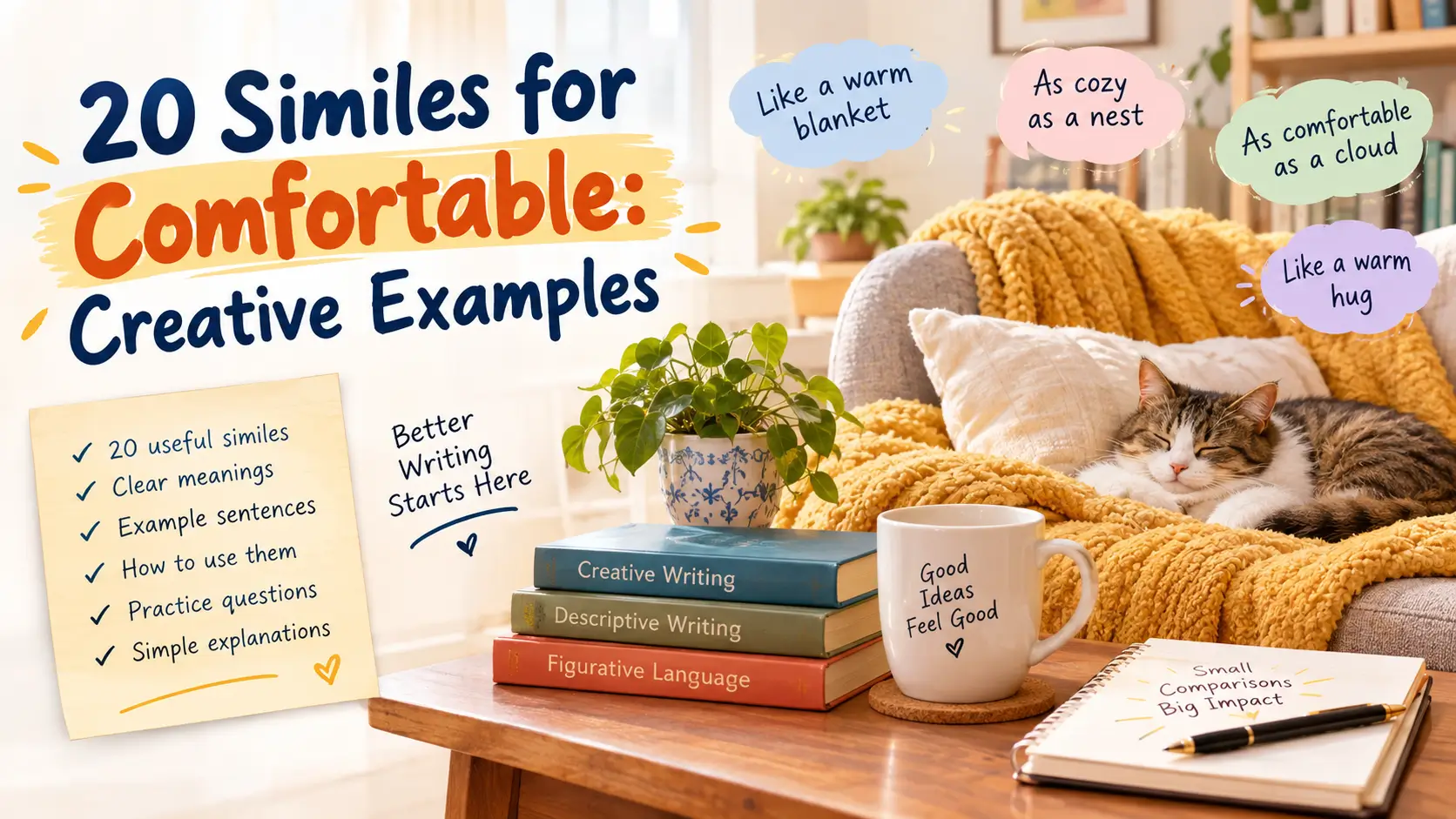
When something feels pleasant, safe, relaxed, or easy, a good simile can help readers feel that comfort too. Similes compare one thing with another by using words such as “like” or “as.” Instead of simply saying, “The chair was comfortable,” you can create a stronger picture by saying, “The chair was as comfortable as a soft cloud.” This gives the reader an image they can almost feel.
In this guide, you’ll find 20 similes for comfortable that work well in stories, poems, essays, conversations, and descriptive writing. Some are simple and familiar, while others add a more creative touch. Each example includes its meaning, what it conveys, and two natural simile sentences. You’ll also learn how to create your own comparisons, understand the meaning of similes, and tell the difference between a simile and a metaphor. By the end, you’ll have plenty of creative writing examples to make your descriptions warmer, clearer, and more vivid.
20 Similes for Comfortable
1. As comfortable as a soft cloud
Meaning: This means something feels very soft, gentle, and pleasant.
What it conveys: It creates an image of sinking into something light, fluffy, and relaxing.
Example sentences:
- The new sofa was as comfortable as a soft cloud.
- After a long day, her bed felt as comfortable as a soft cloud.
2. As comfortable as an old pair of slippers
Meaning: This describes something familiar, easy, and pleasant to use.
What it conveys: It suggests the comfort that comes from something well-known and trusted.
Example sentences:
- His favorite chair was as comfortable as an old pair of slippers.
- The little café felt as comfortable as an old pair of slippers.
3. Like sinking into a warm blanket
Meaning: This means something feels warm, safe, and deeply relaxing.
What it conveys: The comparison creates a cozy feeling of being wrapped in warmth.
Example sentences:
- The quiet room was like sinking into a warm blanket.
- Talking with her best friend was like sinking into a warm blanket.
4. As cozy as a nest
Meaning: This means a place feels safe, warm, and protected.
What it conveys: It gives the reader an image of a small, peaceful place where someone can rest.
Example sentences:
- Their little bedroom was as cozy as a nest.
- The reading corner was as cozy as a nest on a rainy afternoon.
5. Like sitting beside a warm fire
Meaning: This describes a feeling of warmth, peace, and relaxation.
What it conveys: It suggests comfort that makes you feel calm and protected.
Example sentences:
- Her grandmother’s kitchen felt like sitting beside a warm fire.
- The friendly conversation was like sitting beside a warm fire.
6. As relaxed as a cat in the sunshine
Meaning: This means someone feels completely calm and at ease.
What it conveys: It creates a peaceful picture of a cat stretching out in a warm, sunny spot.
Example sentences:
- After finishing his work, Daniel felt as relaxed as a cat in the sunshine.
- She looked as relaxed as a cat in the sunshine while resting in the garden.
7. As comfortable as a favorite chair
Meaning: This describes something that feels familiar, dependable, and pleasant.
What it conveys: It suggests the special comfort people associate with a chair they use often.
Example sentences:
- The hotel bed was as comfortable as a favorite chair.
- Their friendship felt as comfortable as a favorite chair.
8. Like a warm hug
Meaning: This means something gives a person a strong feeling of comfort and care.
What it conveys: It creates a warm emotional image of being supported and welcomed.
Example sentences:
- The soft blanket felt like a warm hug.
- Her kind words were like a warm hug after a difficult day.
9. As soft as fresh cotton
Meaning: This means something feels smooth, gentle, and pleasant against the skin.
What it conveys: It creates a clear sensory image of softness and physical comfort.
Example sentences:
- The new sheets were as soft as fresh cotton.
- The baby’s blanket was as soft as fresh cotton.
10. Like floating on calm water
Meaning: This describes a peaceful and relaxed physical or emotional state.
What it conveys: It gives the feeling of having no pressure or tension.
Example sentences:
- The massage made her feel like she was floating on calm water.
- Resting in the hammock was like floating on calm water.
11. As snug as a bug in a rug
Meaning: This means being very cozy, warm, and comfortable.
What it conveys: It creates a playful picture of someone tucked safely into a warm place.
Example sentences:
- Wrapped in three blankets, the child was as snug as a bug in a rug.
- We were as snug as bugs in a rug during the cold evening.
12. As peaceful as a quiet garden
Meaning: This means something feels calm, still, and free from stress.
What it conveys: It gives readers a peaceful sensory image of a quiet outdoor space.
Example sentences:
- The little cottage was as peaceful as a quiet garden.
- Her bedroom felt as peaceful as a quiet garden after sunset.
13. Like resting on a feather
Meaning: This suggests something is extremely soft and gentle.
What it conveys: It creates an image of light, delicate comfort.
Example sentences:
- The pillow felt like resting on a feather.
- The soft mattress was like resting on a feather.
14. As easy as lying on a soft bed
Meaning: This means something requires little effort and feels comfortable.
What it conveys: It combines the ideas of ease and physical relaxation.
Example sentences:
- Finishing the simple task was as easy as lying on a soft bed.
- Once she understood the rules, the activity felt as easy as lying on a soft bed.
15. Like being wrapped in sunshine
Meaning: This describes a warm, cheerful, and comforting feeling.
What it conveys: It combines physical warmth with emotional happiness.
Example sentences:
- The morning sunlight felt like being wrapped in sunshine.
- Her mother’s cheerful smile was like being wrapped in sunshine.
16. As welcoming as a warm home
Meaning: This means a place or person makes you feel safe, accepted, and relaxed.
What it conveys: It creates an image of entering a place where you immediately feel at ease.
Example sentences:
- The small inn was as welcoming as a warm home.
- Their family gathering was as welcoming as a warm home.
17. Like a gentle breeze on a hot day
Meaning: This describes something that brings relief and comfort when things feel difficult.
What it conveys: It creates a refreshing image of cool air bringing relief from heat.
Example sentences:
- The cool drink was like a gentle breeze on a hot day.
- Her encouraging message was like a gentle breeze on a hot day.
18. As relaxing as a hammock on a summer afternoon
Meaning: This means something feels deeply restful and peaceful.
What it conveys: It creates an image of slowly resting without pressure or hurry.
Example sentences:
- The quiet music was as relaxing as a hammock on a summer afternoon.
- Reading by the window felt as relaxing as a hammock on a summer afternoon.
19. Like coming home after a long journey
Meaning: This describes a powerful feeling of relief, safety, and familiarity.
What it conveys: It shows emotional comfort as well as physical relaxation.
Example sentences:
- Seeing her family again was like coming home after a long journey.
- His favorite book felt like coming home after a long journey.
20. As comfortable as being wrapped in a warm blanket
Meaning: This means something feels safe, cozy, warm, and relaxing.
What it conveys: It creates a strong image of protection and peaceful rest.
Example sentences:
- The oversized sweater was as comfortable as being wrapped in a warm blanket.
- Spending the evening with close friends felt as comfortable as being wrapped in a warm blanket.
How to Use Similes in Writing
Creating your own similes becomes easier when you follow a few simple steps.
Start with the thing you want to describe
First, decide what you want readers to notice. It could be a person, room, feeling, object, sound, or experience.
For example:
- The chair is comfortable.
- The room is peaceful.
- She feels safe.
Find a familiar comparison
Think of something people already associate with the quality you want to describe.
For comfort, you might think of:
- soft blankets
- warm fires
- favorite chairs
- cozy beds
- quiet gardens
- sunny afternoons
Use “like” or “as”
A simile often uses like or as.
- The pillow was like a cloud.
- The room was as cozy as a nest.
- His voice was like a warm blanket.
Make the comparison clear
The comparison should help the reader understand your idea. Avoid comparisons that are so unusual that the reader cannot see the connection.
Instead of:
The sofa was like a purple moon.
Try:
The sofa was like a soft cloud.
Avoid clichés when possible
Common similes can work, especially for beginners, but fresh comparisons can make creative writing more interesting.
For example:
The room was as comfortable as a favorite chair.
This feels more personal than simply saying:
The room was nice.
Match the tone
A funny story may need a playful simile. A serious story may need a gentle or emotional comparison.
For example:
He sat as snug as a bug in a rug.
This has a playful tone.
But:
Her mother’s voice was like a warm blanket.
This has a softer, emotional tone.
Add sensory details
Strong descriptive writing helps readers see, hear, touch, smell, or even feel the scene.
Compare:
The bed was comfortable.
With:
The bed felt like sinking into a warm cloud after a long day.
The second sentence gives the reader a stronger experience.
What Is a Simile?
A simile is a type of figurative language that compares two different things to make an idea clearer or more vivid. Similes commonly use words such as like or as.
For example:
The blanket was as soft as cotton.
The blanket is not literally cotton. The comparison helps the reader imagine its softness.
Another example is:
Her smile was like sunshine.
The smile is not actually sunshine. The comparison suggests warmth, brightness, and happiness.
Writers use similes because they make ordinary descriptions more interesting. Instead of simply saying someone is comfortable, you can show that feeling through a familiar image.
The phrase “strohl simile” is not a standard literary term. If you encounter it in a search, it may be a typo, a name, or an intended phrase that needs more context. A normal simile simply makes a comparison, usually with “like” or “as.”
Simile vs. Metaphor
Similes and metaphors both make comparisons, but they do it in different ways.
Simile: “The room smelled like rotten eggs.”
The comparison is direct and uses like.
Metaphor: “The room was a rotten-egg factory.”
The comparison is stated as if one thing actually is another.
Here is another simple pair:
- Simile: The pillow was as soft as a cloud.
- Metaphor: The pillow was a cloud.
For beginners, remember this easy rule: a simile usually says something is like something else, while a metaphor says it is something else.
Practical Exercise: 10 Questions
- Fill in the blank: The sofa was as comfortable as a ________. Choose a comparison that suggests softness and comfort.
- Identify the simile: Which sentence contains a simile?
- A. The room was quiet.
- B. The room was like a peaceful garden.
- C. The room had blue walls.
- Multiple choice: Which comparison best describes a warm, safe feeling?
- A. Like a sharp rock
- B. Like a warm hug
- C. Like a loud alarm
- Fill in the blank: Complete this simile: “The pillow felt like ________.”
- Identify the simile: Is this sentence a simile? “Her bedroom was as cozy as a nest.” Explain your answer.
- Multiple choice: Which sentence uses a simile correctly?
- A. The chair is comfort.
- B. The chair was a cloud.
- C. The chair was as comfortable as an old pair of slippers.
- Create your own: Write a simile describing a comfortable bed.
- Compare two sentences: Which sentence gives a stronger picture of comfort, and why?
- A. The room was comfortable.
- B. The room was like sitting beside a warm fire.
- Fill in the blank: “After the stressful day, the quiet music was like __________.” Create your own comparison that shows relief.
- Create your own simile: Describe a comfortable friendship using like or as.
Answers and Explanations
- Possible answer: “The sofa was as comfortable as a soft cloud.”
The comparison works because clouds are commonly associated with softness and lightness. Other suitable answers may also work. - Answer: B. The room was like a peaceful garden.
The word “like” connects the room with a peaceful garden, making it a simile. - Answer: B. Like a warm hug.
A warm hug commonly suggests safety, care, and emotional comfort. - Possible answer: “The pillow felt like a feather.”
Feathers suggest softness and lightness. Other clear comparisons can also be correct. - Answer: Yes.
The sentence uses “as … as” to compare the bedroom’s coziness with a nest. - Answer: C. The chair was as comfortable as an old pair of slippers.
This sentence uses the “as … as” structure to make a clear comparison. - Possible answer: “The bed was as soft as a cloud.”
This creates a simple image of softness and comfort. - Answer: B.
“The room was like sitting beside a warm fire” gives readers a specific image of warmth, peace, and relaxation. Sentence A simply states the idea. - Possible answer: “The quiet music was like a gentle breeze on a hot day.”
The comparison suggests relief after discomfort or stress. Many original answers can work. - Possible answer: “Our friendship is as comfortable as an old favorite sweater.”
This comparison suggests familiarity, warmth, and ease. A different comparison can also be correct if it clearly expresses comfort.
Conclusion
Similes help turn simple descriptions into clear and memorable images. Instead of only saying that something is comfortable, you can compare it with a soft cloud, warm blanket, favorite chair, or another familiar source of comfort. These comparisons help readers understand not just what something is like, but how it feels.
The 20 similes for comfortable in this guide give you useful starting points for stories, poems, essays, and everyday descriptive writing. As you practice, try creating comparisons from your own experiences. Think about places, objects, sounds, people, and moments that make you feel relaxed. Then connect those ideas with “like” or “as.” With practice, your simile sentences will become more natural, vivid, and creative.

I’m Jude James, a passionate writer who loves making similes, metaphors, and idioms easy to understand. I enjoy helping readers explore creative language and express ideas with confidence.