Being surprised is a strong feeling, and a good simile can make that feeling easy to picture. When you are shocked, amazed, or caught off guard, a simple comparison can show exactly what that moment feels like. Instead of saying, “She was very surprised,” you can write, “She looked as startled as a deer in headlights.” This gives the reader a clear image and makes the sentence more lively.
These similes for surprised are useful for stories, poems, school assignments, and everyday descriptive writing. You will find comparisons that show shock, wonder, amazement, and sudden disbelief. Each example includes a simple meaning, what it conveys, and two simile sentences so you can see how it works in context.
Whether you are new to figurative language or looking for fresh ideas for creative writing, these examples can help you learn how to use similes in writing. You can also use them as inspiration to create your own comparisons.
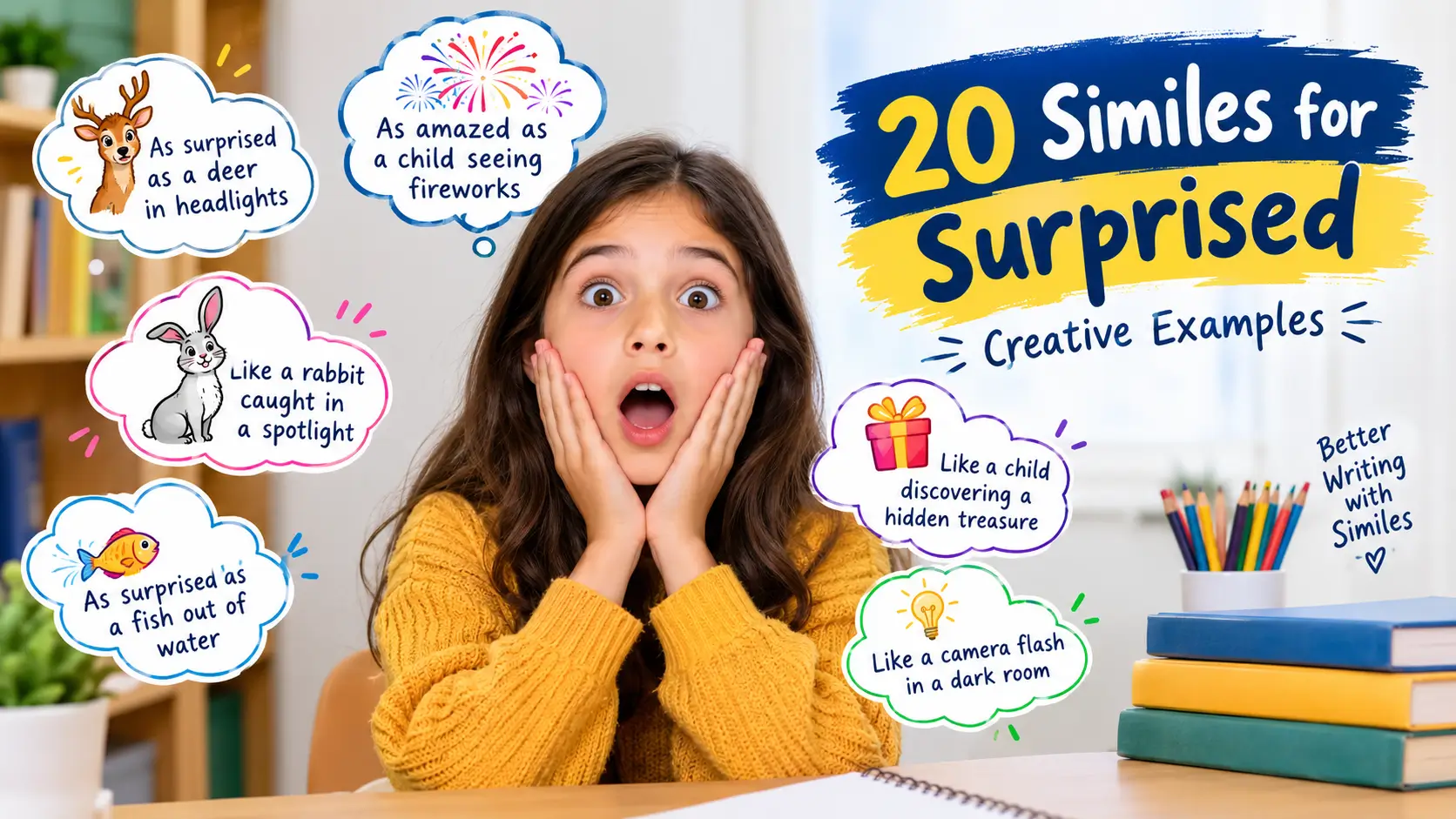
20 Similes for Surprised
1. As surprised as a deer in headlights
Meaning: Extremely shocked and unsure what to do.
What it conveys: This creates an image of someone suddenly frozen by an unexpected event.
Example sentences:
- Maya looked as surprised as a deer in headlights when everyone shouted, “Surprise!”
- He stood as surprised as a deer in headlights after hearing the unexpected news.
2. As surprised as a child on Christmas morning
Meaning: Very excited and amazed by something unexpected.
What it conveys: This simile suggests happy surprise and genuine excitement.
Example sentences:
- Liam was as surprised as a child on Christmas morning when he opened the box.
- She looked as surprised as a child on Christmas morning when the gift appeared.
3. Like a rabbit caught in a spotlight
Meaning: Suddenly shocked and unable to react normally.
What it conveys: It creates an image of someone frozen by sudden attention or news.
Example sentences:
- He stared like a rabbit caught in a spotlight when the teacher called his name.
- She stood like a rabbit caught in a spotlight after hearing the announcement.
4. As startled as a cat hearing a sudden noise
Meaning: Quickly shocked by something unexpected.
What it conveys: This comparison shows a sudden physical reaction to surprise.
Example sentences:
- I jumped as startled as a cat hearing a sudden noise.
- Ben looked as startled as a cat hearing a sudden noise when the door slammed.
5. Like a balloon suddenly popping
Meaning: Suddenly shocked or caught completely off guard.
What it conveys: The simile suggests an instant, dramatic reaction.
Example sentences:
- Her expression changed like a balloon suddenly popping.
- He looked like a balloon suddenly popping when he heard the result.
6. As surprised as a fish out of water
Meaning: Very confused and shocked by an unfamiliar situation.
What it conveys: It shows someone who does not know how to respond.
Example sentences:
- Jake looked as surprised as a fish out of water when everyone started cheering.
- She seemed as surprised as a fish out of water in the middle of the strange event.
7. Like lightning striking without warning
Meaning: Shocked by something that happens very suddenly.
What it conveys: This creates a powerful image of instant surprise.
Example sentences:
- The announcement hit him like lightning striking without warning.
- Her sudden discovery felt like lightning striking without warning.
8. As amazed as a child seeing fireworks for the first time
Meaning: Filled with wonder and surprise.
What it conveys: This simile shows joyful amazement rather than fear.
Example sentences:
- The students looked as amazed as children seeing fireworks for the first time.
- She was as amazed as a child seeing fireworks for the first time.
9. Like a door suddenly swinging open
Meaning: Suddenly surprised by something unexpected.
What it conveys: It suggests that the surprise arrives quickly and changes the moment.
Example sentences:
- His eyes widened like a door suddenly swinging open.
- The news struck her like a door suddenly swinging open.
10. As shocked as someone waking from a strange dream
Meaning: Extremely confused or surprised.
What it conveys: This creates a dreamlike feeling of disbelief.
Example sentences:
- He looked as shocked as someone waking from a strange dream.
- She stood there as shocked as someone waking from a strange dream.
11. Like a bird startled from a tree
Meaning: Suddenly surprised and forced to react quickly.
What it conveys: This simile shows a quick, nervous response.
Example sentences:
- He jumped like a bird startled from a tree.
- She turned around like a bird startled from a tree when she heard her name.
12. As surprised as finding snow in summer
Meaning: Completely unexpected and unusual.
What it conveys: This comparison highlights how unlikely the event seems.
Example sentences:
- His victory was as surprising as finding snow in summer.
- She looked as surprised as someone finding snow in summer.
13. Like a child discovering a hidden treasure
Meaning: Filled with wonder and excitement.
What it conveys: It shows a happy and curious kind of surprise.
Example sentences:
- He smiled like a child discovering a hidden treasure.
- She looked like a child discovering a hidden treasure when she opened the old box.
14. As startled as a horse at a sudden sound
Meaning: Very suddenly frightened or surprised.
What it conveys: This emphasizes an immediate physical reaction.
Example sentences:
- He jumped as startled as a horse at a sudden sound.
- She turned around as startled as a horse at a sudden sound.
15. Like seeing your shadow move on its own
Meaning: Shocked by something strange or unexpected.
What it conveys: This creates a mysterious feeling of disbelief.
Example sentences:
- The strange sight left him looking like someone seeing his shadow move on its own.
- She stared like she had seen her shadow move on its own.
16. As surprised as a student getting an unexpected holiday
Meaning: Happily shocked by good news.
What it conveys: This shows excitement caused by an unexpected reward.
Example sentences:
- The children were as surprised as students getting an unexpected holiday.
- I felt as surprised as a student getting an unexpected holiday when the meeting was canceled.
17. Like a statue suddenly coming to life
Meaning: Frozen in surprise before reacting.
What it conveys: This gives the reader a strong picture of someone shocked into stillness.
Example sentences:
- He stood like a statue suddenly coming to life when he heard the news.
- She looked like a statue suddenly coming to life after everyone called her name.
18. As surprised as a traveler finding an unexpected landmark
Meaning: Amazed by something unexpected during a journey.
What it conveys: It suggests curiosity, wonder, and pleasant surprise.
Example sentences:
- We were as surprised as travelers finding an unexpected landmark.
- She looked as surprised as a traveler finding an unexpected landmark on the road.
19. Like a camera flash in a dark room
Meaning: Suddenly shocked by something bright, sudden, or unexpected.
What it conveys: This comparison gives a sharp image of surprise arriving instantly.
Example sentences:
- The announcement hit him like a camera flash in a dark room.
- Her sudden question felt like a camera flash in a dark room.
20. As surprised as opening a book to find a secret message
Meaning: Amazed by an unexpected discovery.
What it conveys: This creates a sense of mystery, curiosity, and wonder.
Example sentences:
- She was as surprised as opening a book to find a secret message.
- He looked as surprised as someone opening a book to find a secret message.
How to Use Similes in Writing
A good simile compares one thing to another using words such as like or as. The best comparisons help readers picture a feeling, action, person, or place.
When writing similes for surprised, think about the kind of surprise you want to show. Is the person frightened, amazed, confused, or happily shocked?
Try these simple steps:
- Name the feeling: Start with surprise, shock, wonder, or amazement.
- Choose a familiar image: Think of a deer, fireworks, a sudden noise, or an unexpected gift.
- Use “like” or “as”: Connect the feeling to your comparison.
- Add sensory details: Show what the person sees, hears, or feels.
- Match the tone: A funny story may need a playful simile, while a serious story may need a stronger one.
For example, instead of saying, “Tom was surprised,” write, “Tom was as surprised as a child on Christmas morning.” The second sentence gives the reader a clearer picture.
What Is a Simile?
A simile is a figure of speech that compares two different things using like or as. It helps readers imagine an idea more clearly.
Here are a few simple examples:
- Her smile was like sunshine.
- He ran as fast as a rabbit.
- The baby slept like a log.
Similes are useful in creative writing similes because they make plain ideas more colorful. They can describe emotions, sounds, people, actions, and places.
For example, saying “She was surprised” gives basic information. Saying “She looked like a rabbit caught in a spotlight” creates a stronger mental picture.
Simile vs. Metaphor
Both similes and metaphors make comparisons, but they work in different ways.
A simile uses words such as like or as:
- His eyes were like stars.
- She was as quiet as a mouse.
A metaphor makes a direct comparison without using like or as:
- His eyes were stars.
- She was a mouse in the quiet room.
The meaning can be similar, but the structure is different. Similes often make comparisons easier to recognize, which makes them useful for beginners learning figurative language.
Practical Exercise: 10 Questions
- Fill in the blank: She was as surprised as a child on ______ morning.
- Identify the simile: Which sentence contains a simile?
A. The boy was surprised.
B. The boy looked like a deer in headlights.
C. The boy opened the door. - Multiple choice: Which word commonly introduces a simile?
A. Because
B. Like
C. Although
D. Therefore - Fill in the blank: He jumped like a ______ startled by a sudden sound.
- Identify the comparison: What two things are compared in “She was as amazed as a child seeing fireworks”?
- Multiple choice: Which sentence is a simile?
A. The classroom was a zoo.
B. The classroom was noisy.
C. The classroom was like a busy market. - Create a simile: Write a simile describing someone who is suddenly shocked.
- Create a simile: Complete this sentence: “His face looked like ______.”
- Comparison: Which shows happier surprise: “like a balloon popping” or “like a child discovering a hidden treasure”? Explain briefly.
- Rewrite: Turn “Mia was very surprised” into a sentence using a simile.
Answers and Explanations
- Christmas — “Christmas morning” suggests excitement and happy surprise.
- B. The boy looked like a deer in headlights. — It uses “like” to make a comparison.
- B. Like — “Like” is one of the most common words used in similes.
- Bird — “He jumped like a bird startled by a sudden sound” creates an image of a quick reaction.
- A child and the feeling of amazement. — The comparison shows strong wonder and excitement.
- C. The classroom was like a busy market. — The word “like” connects the classroom to another image.
- Example: “She froze like a deer in headlights.” — This shows sudden shock.
- Example: “His face looked like a bright red apple.” — This could show a strong emotional reaction.
- “Like a child discovering a hidden treasure.” — This suggests joyful wonder, while a popping balloon suggests a sudden, sharp reaction.
- Example: “Mia was as surprised as a child opening an unexpected gift.” — The comparison makes her surprise easier to picture.
Conclusion
Similes can turn a simple statement into a vivid picture. Instead of saying someone was surprised, you can compare that feeling to a deer in headlights, a child seeing fireworks, or someone discovering a hidden treasure. These similes for surprised show that surprise can feel exciting, frightening, confusing, or joyful.
When creating your own similes, choose images that your readers can easily understand. Use like or as, keep the comparison clear, and make sure it matches the feeling you want to express. The best similes are natural and help readers see the scene in their minds.
Keep practicing with different emotions and situations. Soon, you will be able to create your own strong creative writing similes and use them naturally in stories, poems, and everyday descriptive writing.

I am Silas Michael, an enthusiastic writer passionate about similes, metaphors, and idioms. I enjoy explaining creative expressions through simple meanings and examples that help readers understand and improve their English.