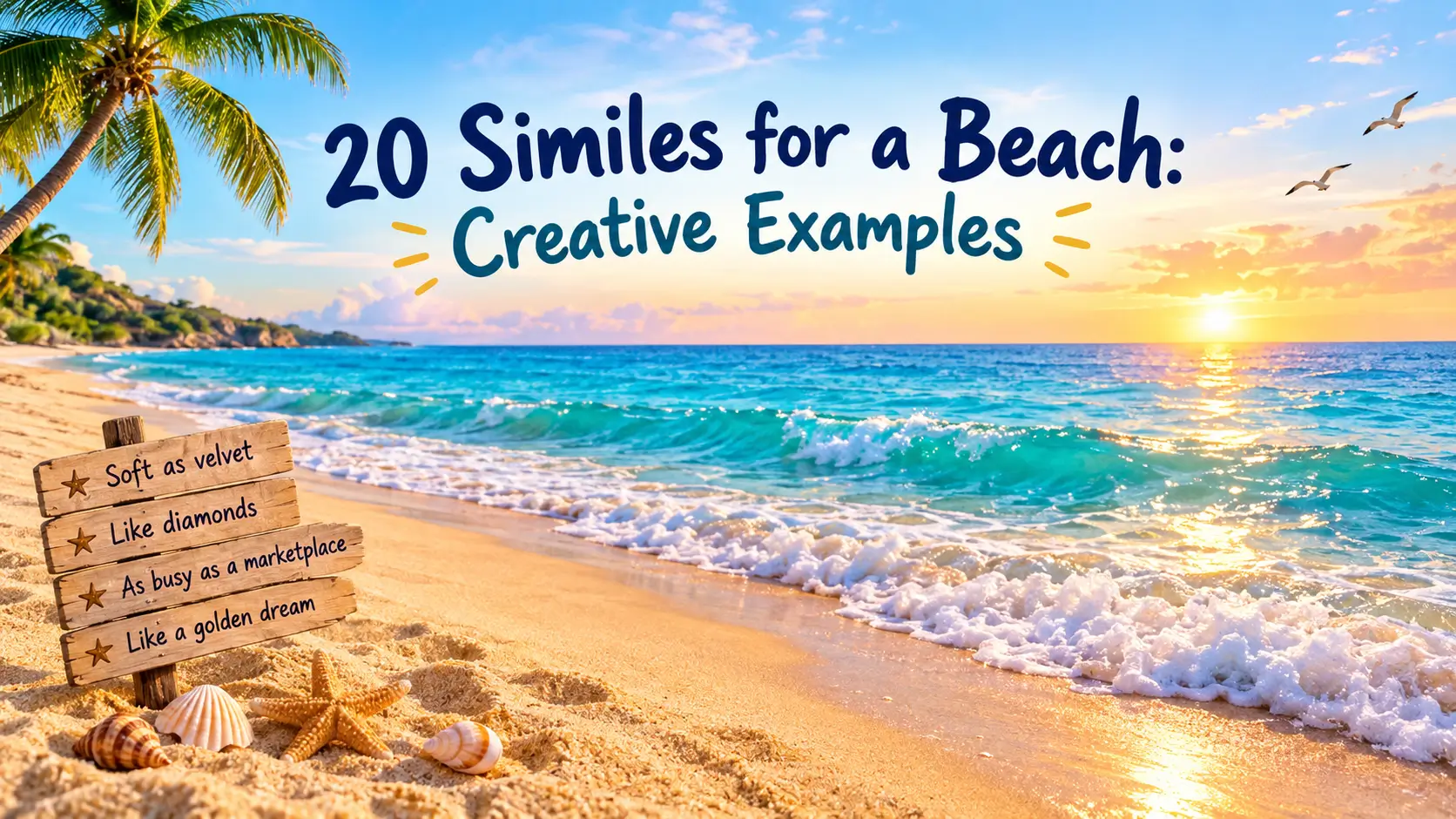
A beach can be calm, bright, noisy, peaceful, or full of life. Similes help you describe these details in a way that readers can easily picture. Instead of simply saying that the sand is soft, you could say it is “as soft as velvet.” This comparison gives the reader a stronger image and makes your writing more interesting.
These similes for a beach are useful for students, beginner writers, storytellers, and anyone who wants to make descriptive writing more vivid. You will find comparisons for sand, waves, sunlight, water, shells, crowds, and the overall feeling of being near the sea.
Each example includes a simple meaning, what the comparison conveys, and two natural simile sentences. As you read, notice how each comparison uses familiar things to create a clear picture.
Whether you are writing a school assignment, a story, a poem, or a travel description, these examples of similes can help you choose words that make your reader feel as if they are standing on the shore.
20 Similes for a Beach
1. The sand was as soft as velvet
Meaning: The sand feels very smooth and gentle.
What it conveys: This simile creates an image of soft, pleasant sand beneath your feet.
Example sentences:
- The sand was as soft as velvet beneath my toes.
- We walked across the beach where the sand felt as soft as velvet.
2. The waves crashed like thunder
Meaning: The waves made a loud, powerful sound.
What it conveys: This comparison shows the strength and noise of the ocean.
Example sentences:
- The waves crashed like thunder against the rocky shore.
- All night, the waves crashed like thunder in the distance.
3. The water sparkled like diamonds
Meaning: The sunlight made the water shine brightly.
What it conveys: It creates a bright, beautiful picture of sunlight dancing on the sea.
Example sentences:
- The blue water sparkled like diamonds under the morning sun.
- At noon, the ocean sparkled like diamonds across the horizon.
4. The beach was as busy as a marketplace
Meaning: There were many people moving around the beach.
What it conveys: This simile gives a sense of noise, activity, and crowds.
Example sentences:
- The beach was as busy as a marketplace during the holiday.
- By noon, the beach was as busy as a marketplace.
5. The ocean was as blue as the sky
Meaning: The ocean had a deep, bright blue color.
What it conveys: It creates a simple and familiar picture of the sea.
Example sentences:
- The ocean was as blue as the sky on that clear morning.
- From the cliff, the water looked as blue as the sky.
6. The breeze was as gentle as a whisper
Meaning: The wind was very soft and quiet.
What it conveys: This comparison creates a calm and peaceful mood.
Example sentences:
- The sea breeze was as gentle as a whisper against my face.
- A breeze as gentle as a whisper moved through the palm trees.
7. The sun was like a golden ball
Meaning: The sun looked round and golden.
What it conveys: It creates a warm, bright image of the sun above the beach.
Example sentences:
- The sun hung over the ocean like a golden ball.
- At sunset, the sun looked like a golden ball sinking into the sea.
8. The shells were scattered like tiny jewels
Meaning: Small shells were spread across the sand.
What it conveys: This makes ordinary shells seem beautiful and valuable.
Example sentences:
- Colorful shells were scattered like tiny jewels along the shore.
- We searched the sand for shells scattered like tiny jewels.
9. The palm trees swayed like dancers
Meaning: The palm trees moved gently in the wind.
What it conveys: It makes the trees seem graceful, lively, and playful.
Example sentences:
- The palm trees swayed like dancers in the warm breeze.
- Along the shore, the palms moved like dancers to the rhythm of the wind.
10. The beach was as peaceful as a sleeping village
Meaning: The beach was very quiet and calm.
What it conveys: This simile creates a strong feeling of stillness and peace.
Example sentences:
- Early in the morning, the beach was as peaceful as a sleeping village.
- After sunset, the empty shore felt as peaceful as a sleeping village.
11. The waves rolled in like giant ribbons
Meaning: The waves moved smoothly toward the shore.
What it conveys: This comparison highlights the flowing shape and movement of the waves.
Example sentences:
- The waves rolled in like giant ribbons across the blue sea.
- From the boat, we watched waves roll toward the beach like giant ribbons.
12. The sand was hot as a frying pan
Meaning: The sand was extremely warm from the sun.
What it conveys: This creates a vivid image of how hot the beach felt.
Example sentences:
- By afternoon, the sand was hot as a frying pan.
- We hurried to our towels because the sand was hot as a frying pan.
13. The sunset spread like spilled paint
Meaning: The sunset covered the sky with many colors.
What it conveys: It creates a colorful, artistic image of the evening sky.
Example sentences:
- The sunset spread like spilled paint across the horizon.
- Orange and pink clouds appeared as the sunset spread like spilled paint.
14. The seagulls were as noisy as a classroom
Meaning: The seagulls made a lot of loud sounds.
What it conveys: This comparison adds energy and noise to the beach scene.
Example sentences:
- The seagulls were as noisy as a classroom during lunch.
- Above the beach, the birds were as noisy as a classroom full of excited children.
15. The shoreline curved like a crescent moon
Meaning: The beach had a curved shape.
What it conveys: This creates a clear picture of the shape of the coastline.
Example sentences:
- The shoreline curved like a crescent moon around the bay.
- From the hill, the beach looked like a crescent moon.
16. The foam was white as snow
Meaning: The sea foam was bright white.
What it conveys: This comparison emphasizes the clean, pale appearance of the foam.
Example sentences:
- White foam gathered along the shore, white as snow.
- The waves left trails of foam that were white as snow.
17. The beach stretched like an endless blanket
Meaning: The beach seemed to continue for a very long distance.
What it conveys: It gives the reader a sense of wide, open space.
Example sentences:
- The golden beach stretched like an endless blanket beside the sea.
- From the lookout point, the beach stretched like an endless blanket.
18. The children ran like excited rabbits
Meaning: The children moved quickly and energetically.
What it conveys: This comparison adds fun, speed, and playful energy.
Example sentences:
- The children ran like excited rabbits toward the water.
- As soon as they arrived, the kids scattered like excited rabbits across the sand.
19. The ocean breeze felt like a cool kiss
Meaning: The breeze felt pleasantly cool against the skin.
What it conveys: This creates a gentle, refreshing, and pleasant feeling.
Example sentences:
- The ocean breeze felt like a cool kiss on my warm cheeks.
- After walking in the sun, the sea air felt like a cool kiss.
20. The beach glowed like a golden dream
Meaning: The beach looked warm, beautiful, and almost magical.
What it conveys: This simile creates a dreamy and peaceful image.
Example sentences:
- At sunset, the beach glowed like a golden dream.
- The quiet shore glowed like a golden dream beneath the evening sky.
How to Use Similes in Writing
Good similes make writing easier to picture. Start with something your reader already knows. Then connect it to the thing you want to describe using like or as.
For example:
- The sand was soft like velvet.
- The waves sounded like thunder.
- The water was as blue as the sky.
Use your senses when creating similes. Ask yourself:
- What does it look like?
- What does it sound like?
- What does it feel like?
- What does it smell like?
- What does it remind me of?
Choose comparisons that match the mood. A peaceful beach might be as quiet as a sleeping village, while a crowded beach might be as busy as a marketplace.
Try not to force a comparison. The best creative writing similes feel natural and help readers understand the scene quickly.
What Is a Simile?
A simile is a type of figurative language that compares two different things using words such as like or as.
For example:
- The sand was soft like cotton.
- The waves were as loud as thunder.
- The water shone like glass.
A simile does not mean that two things are actually the same. Instead, it helps the reader imagine a quality they share.
Similes are especially useful in descriptive writing because they turn simple facts into clearer mental pictures.
Simile vs. Metaphor
A simile makes a comparison using like or as.
- The ocean was like a giant mirror.
A metaphor makes a direct comparison without using like or as.
- The ocean was a giant mirror.
Both forms of figurative language can make writing more vivid. The main difference is how the comparison is made.
If you are learning how to use similes in writing, look for the words like and as first. They are useful clues that a comparison may be a simile.
Practical Exercise: 10 Questions
- Fill in the blank: The waves crashed like ________.
- Fill in the blank: The sand was as soft as ________.
- Identify the simile: “The ocean sparkled like diamonds.” What two things are being compared?
- Multiple choice: Which sentence contains a simile?
A. The beach was beautiful.
B. The beach was a golden dream.
C. The beach was like a golden painting.
D. The beach had soft sand. - Multiple choice: Which comparison best describes a quiet beach?
A. As noisy as a stadium
B. As peaceful as a sleeping village
C. Like a roaring engine
D. As busy as a marketplace - Create a simile: Write a simile describing the color of ocean water.
- Create a simile: Write a simile describing the sound of waves.
- Comparison: Is this a simile or a metaphor? “The beach was a golden blanket.”
- Comparison: Is this a simile or a metaphor? “The waves moved like silver ribbons.”
- Improve the sentence: Turn “The sunset was beautiful” into a sentence containing a simile.
Answers and Explanations
- Thunder.
“The waves crashed like thunder” compares the sound of waves to thunder. - Velvet.
“The sand was as soft as velvet” shows how smooth and gentle the sand feels. - The ocean and diamonds.
The comparison shows that the sunlight made the water sparkle brightly. - C. The beach was like a golden painting.
The word “like” signals a simile. - B. As peaceful as a sleeping village.
This comparison suggests quietness and calm. - Answers will vary.
For example: “The ocean was as blue as the summer sky.” - Answers will vary.
For example: “The waves roared like a distant train.” - Metaphor.
The sentence directly calls the beach a golden blanket without using like or as. - Simile.
The word “like” connects the waves with silver ribbons. - Answers will vary.
For example: “The sunset spread across the sky like a colorful painting.”
Conclusion
Learning similes for a beach can make your writing clearer, more colorful, and more fun to read. A simple comparison can help readers picture the sand, waves, sunlight, water, and sky in a new way. Start with familiar things, such as velvet, diamonds, ribbons, thunder, or snow. Then connect them to your beach description with like or as.
The best similes are simple and natural. They should add meaning instead of making a sentence harder to understand. Use the examples in this guide as inspiration, but do not be afraid to create your own. Look around, notice details, and ask what each sight, sound, or feeling reminds you of. With practice, you can use similes to make stories, poems, and descriptive writing much more vivid.

I am Beau Thomas, the Administrator at SimilyHub. I enjoy making similes, metaphors, and idioms easy to understand through clear explanations, helpful examples, and engaging content for English learners and writers.