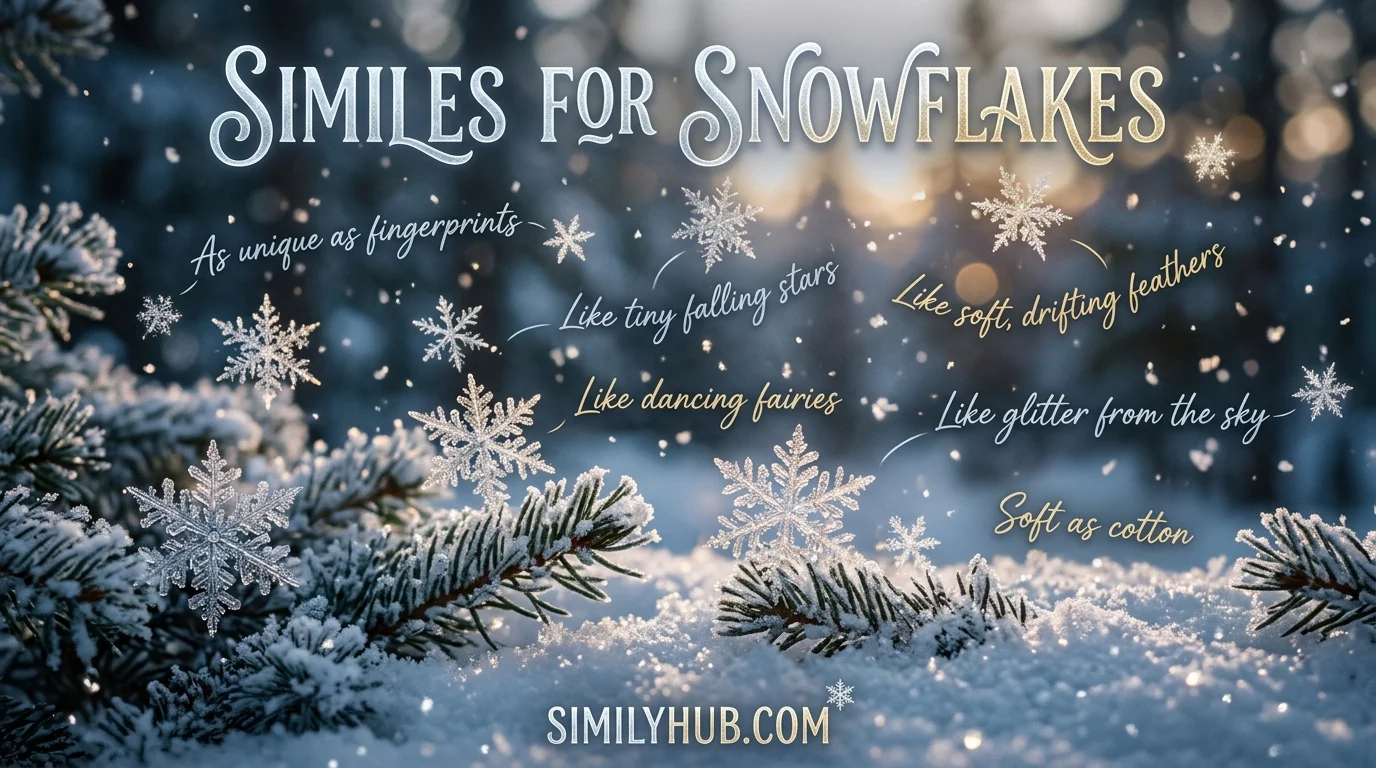
Have you ever watched snowflakes fall from the sky on a cold winter day? Each tiny flake seems to dance through the air before landing on the ground. Some look like tiny stars, while others remind us of delicate flowers. Snowflakes make winter feel magical, and similes help us describe that magic with words.
A simile compares two different things using words such as like or as. For example, “The snowflakes fell like feathers from the sky” helps readers imagine snow falling softly and slowly. Instead of simply saying that it snowed, you can use a simile to make your writing more colorful and fun.
Whether you are writing a winter story, a poem, a school assignment, or a holiday greeting, similes for snowflakes can bring your ideas to life. You do not need fancy words to make your writing beautiful. A simple comparison can create a clear picture in the reader’s mind.
In this guide, you will discover 20 creative snowflake similes, their meanings, and easy example sentences. You will also find a fun exercise to help you practice writing your own similes.
20 Similes for Snowflakes With Meanings and Examples
These examples of similes can help you describe the beauty, shape, movement, and softness of snowflakes in creative writing.
1. Snowflakes Fell Like Feathers
Meaning: Snowflakes fall softly and gently through the air.
Explanation: Feathers are light and delicate. This simile helps readers picture snow drifting slowly toward the ground.
Examples:
- Snowflakes fell like feathers from the gray winter sky.
- The children watched the snow fall like feathers around their house.
2. Snowflakes Sparkled Like Tiny Diamonds
Meaning: Snowflakes shine brightly in the light.
Explanation: Diamonds are known for their sparkle. This comparison shows how beautiful snow can look when sunlight touches it.
Examples:
- The snowflakes sparkled like tiny diamonds on the frozen pond.
- Under the morning sun, the snow shone like a field of diamonds.
3. Snowflakes Danced Like Fairies
Meaning: Snowflakes move lightly and playfully through the air.
Explanation: Fairies are often shown as magical creatures that float and dance. This simile gives snowfall a dreamy feeling.
Examples:
- Snowflakes danced like fairies outside the classroom window.
- The winter wind made the snowflakes dance like tiny fairies.
4. Snowflakes Were as Soft as Cotton
Meaning: Snowflakes seem light, soft, and delicate.
Explanation: Cotton is soft and fluffy. This comparison helps readers imagine the gentle appearance of falling snow.
Examples:
- The fresh snow looked as soft as cotton on the rooftops.
- White snowflakes covered the garden like soft cotton.
5. Snowflakes Twinkled Like Stars
Meaning: Snowflakes shine like little points of light.
Explanation: Stars create a beautiful image of light in the darkness. This simile describes sparkling snow on a winter night.
Examples:
- Snowflakes twinkled like stars beneath the streetlights.
- The frozen field glittered as snowflakes shone like stars.
6. Snowflakes Swirled Like Leaves in the Wind
Meaning: Snowflakes spin and move in different directions.
Explanation: Falling leaves often twist and turn in the wind. This comparison shows the changing movement of snow during a breeze.
Examples:
- Snowflakes swirled like leaves in the strong winter wind.
- Outside, the snow spun like autumn leaves caught in a storm.
7. Snowflakes Were as White as Milk
Meaning: Snowflakes look bright and white.
Explanation: Milk is a familiar example of a clean, white color. This simile is useful for simple descriptions.
Examples:
- The snowflakes looked as white as milk against the dark trees.
- White flakes covered the garden, bright as milk on a winter morning.
8. Snowflakes Floated Like Tiny Boats
Meaning: Snowflakes drift slowly and gently through the air.
Explanation: Small boats can glide across calm water. This simile makes snowflakes seem peaceful as they move downward.
Examples:
- Snowflakes floated like tiny boats through the cold air.
- A few flakes drifted like little boats across the open sky.
9. Snowflakes Were Like Tiny Flowers
Meaning: Snowflakes have delicate shapes that can resemble flowers.
Explanation: Many snow crystals form beautiful, branching patterns. Comparing them to flowers highlights their delicate designs.
Examples:
- Each snowflake looked like a tiny flower resting on her mitten.
- The children admired the snowflakes, which resembled little flowers.
10. Snowflakes Fell Like Pieces of Paper
Meaning: Snowflakes drift down in small, separate pieces.
Explanation: Tiny pieces of paper can flutter as they fall. This simile creates a simple picture of snow filling the air.
Examples:
- Snowflakes fell like pieces of paper during the school parade.
- White flakes fluttered like scraps of paper above the playground.
11. Snowflakes Glittered Like Silver Dust
Meaning: Snowflakes shine with a soft, silvery sparkle.
Explanation: Silver dust suggests tiny particles that catch the light. This comparison works well in magical winter scenes.
Examples:
- Snowflakes glittered like silver dust across the frozen path.
- The moonlight made the snow look like silver dust on the ground.
12. Snowflakes Were as Delicate as Glass
Meaning: Snowflakes appear fragile and finely shaped.
Explanation: Glass can be delicate and breakable. This simile highlights the fragile beauty of snow crystals.
Examples:
- The tiny snowflake looked as delicate as glass on her glove.
- Each crystal seemed as delicate as glass beneath the winter sun.
13. Snowflakes Drifted Like Clouds
Meaning: Snowflakes move slowly and gently through the sky.
Explanation: Clouds often glide across the sky at a calm pace. This comparison creates a peaceful winter picture.
Examples:
- Snowflakes drifted like clouds above the quiet village.
- Large flakes floated like little clouds past the window.
14. Snowflakes Covered the Ground Like a White Blanket
Meaning: Snow spreads over the ground in a thick, even layer.
Explanation: A blanket covers and hides what lies beneath it. This simile helps readers picture a landscape covered in snow.
Examples:
- The snow covered the garden like a white blanket.
- By morning, the hills lay beneath a blanket of snow.
15. Snowflakes Fell Like Confetti
Meaning: Snowflakes fill the air like tiny pieces thrown during a celebration.
Explanation: Confetti is often used at parties. This comparison makes snowfall seem joyful and festive.
Examples:
- Snowflakes fell like confetti during the winter festival.
- The children cheered as flakes floated down like white confetti.
16. Snowflakes Were as Cold as Ice
Meaning: Snowflakes feel very cold when they touch the skin.
Explanation: Ice is a familiar symbol of coldness. This simile emphasizes the chilly feeling of winter snow.
Examples:
- The snowflakes felt as cold as ice on his cheeks.
- She brushed away flakes that were cold as ice on her hands.
17. Snowflakes Spun Like Tiny Pinwheels
Meaning: Snowflakes rotate as the wind carries them through the air.
Explanation: Pinwheels spin when the wind blows. This comparison shows the lively movement of snowflakes during windy weather.
Examples:
- Snowflakes spun like tiny pinwheels outside the cabin.
- The breeze sent white flakes spinning like little pinwheels.
18. Snowflakes Shimmered Like Pearls
Meaning: Snowflakes have a soft, beautiful shine.
Explanation: Pearls are smooth and luminous. This simile gives snow a gentle and elegant appearance.
Examples:
- Snowflakes shimmered like pearls on the dark branches.
- Her coat was dotted with flakes that glistened like tiny pearls.
19. Snowflakes Were as Quiet as Whispers
Meaning: Snowfall creates a calm and peaceful atmosphere.
Explanation: A whisper is soft and quiet. This simile focuses on the stillness often felt during gentle snowfall.
Examples:
- Snowflakes fell as quietly as whispers in the sleeping village.
- The snow drifted past the window, quiet as a whisper.
20. Snowflakes Were Like Tiny Pieces of Magic
Meaning: Snowflakes seem wonderful, unusual, and enchanting.
Explanation: Magic suggests wonder and mystery. This simile is perfect for fairy tales, children’s stories, and imaginative winter poems.
Examples:
- Snowflakes landed on her scarf like tiny pieces of magic.
- The children watched the sky fill with snowflakes, each one like a little piece of magic.
How to Use Snowflake Similes in Creative Writing
Snowflake similes can make your stories, poems, and descriptions more vivid. The trick is to choose a comparison that matches the scene.
Here are four easy tips:
- Describe movement: Use “Snowflakes danced like fairies” to show playful snowfall.
- Show texture: Use “The snow looked as soft as cotton” to describe a fresh layer of snow.
- Create a mood: Use “Snowflakes fell as quietly as whispers” to build a peaceful scene.
- Add magic: Use “Snowflakes sparkled like tiny diamonds” to make a winter setting feel special.
Remember, the best similes help readers picture what you mean. Try not to use too many comparisons in one sentence. One clear, strong simile can make a bigger impact than several mixed together.
Practical Exercise: Test Your Simile Skills
Try these 10 questions to practice identifying and completing similes about snowflakes.
Questions
1. Complete the simile:
Snowflakes fell like ______ from the sky.
2. Fill in the blank:
Snowflakes sparkled like tiny ______ in the sunlight.
3. Identify the simile:
“The snowflakes danced like fairies above the garden.”
Which two things are being compared?
4. Choose the best answer:
Which simile describes the gentle movement of snowflakes?
A. Snowflakes fell like feathers.
B. Snowflakes roared like thunder.
C. Snowflakes stood like walls.
5. Complete the sentence:
The snow looked as soft as ______.
6. What does this simile mean?
“The snow covered the ground like a white blanket.”
7. Create your own simile:
Complete this sentence: “Snowflakes glittered like ______.”
8. Choose the best simile for sparkling snow:
A. Snowflakes shimmered like pearls.
B. Snowflakes slept like rocks.
C. Snowflakes shouted like people.
9. Identify the simile:
“Snowflakes spun like tiny pinwheels in the wind.”
10. Write your own sentence:
Create a simile that describes snowflakes falling on a winter night.
Answers and Explanations
1. Feathers.
“Snowflakes fell like feathers” shows that they are light and gentle.
2. Diamonds.
“Snowflakes sparkled like tiny diamonds” describes their bright shine.
3. Snowflakes and fairies.
The sentence compares the movement of snowflakes to the playful dance of fairies.
4. A. Snowflakes fell like feathers.
Feathers drift softly, making them a good comparison for gentle snowfall.
5. Cotton.
Cotton is soft and fluffy, so it helps describe the appearance of fresh snow.
6. Snow covers the ground in a wide layer.
A blanket covers a surface, just as falling snow can cover grass, roads, and rooftops.
7. Example answer: Silver dust.
“Snowflakes glittered like silver dust” creates an image of tiny sparkling particles. Other sensible comparisons are also correct.
8. A. Snowflakes shimmered like pearls.
Pearls have a gentle shine, making them a fitting comparison for shimmering snow.
9. “Snowflakes spun like tiny pinwheels.”
This comparison shows snowflakes rotating in the wind.
10. Example answer: “Snowflakes twinkled like stars beneath the moon.”
This simile compares the brightness of snowflakes to the light of stars. Your sentence can use a different comparison if it creates a clear image.
Conclusion
Similes for snowflakes help us turn a simple winter scene into something beautiful and memorable. By comparing snowflakes to feathers, diamonds, flowers, stars, and other familiar things, we can describe their movement, shape, softness, and sparkle.
These comparisons are useful for poems, short stories, school assignments, greeting cards, and many other kinds of writing. They also help readers imagine a scene instead of just reading a list of details.
When writing your own similes, think about what you see, hear, or feel during snowfall. Is it soft like cotton? Does it sparkle like silver dust? Let your imagination guide you.
Start with one simple comparison and build from there. With practice, you can create original similes that make every winter scene feel more alive.

I’m Evelyn Marie, an author passionate about similes, metaphors, and idioms. I enjoy explaining creative expressions simply, helping readers understand language and make their writing more engaging.