Conflict is a part of life. It can happen between friends, family members, coworkers, or even inside our own minds. But how do you describe a heated argument, a painful disagreement, or a struggle that never seems to end? This is where similes can help.
Similes make your writing more vivid and clear. They compare one thing to another using words such as like or as. For example, you might say, “Their argument was like a storm.” This helps readers picture a loud, wild fight instead of simply reading that two people argued.
Whether you are writing a story, a poem, a school essay, or a blog post, similes for conflict can help you express strong feelings and tense moments. They can show anger, fear, confusion, and even the hope of making peace.
In this guide, you will find 20 creative writing similes about conflict. Each one includes its meaning, a simple explanation, and two example sentences. You will also get a short exercise to test your skills. Let’s explore these examples of similes and learn how to use them in your writing.
20 Similes for Conflict
1. Conflict Like a Storm
Simile: Their argument was like a storm.
Meaning: A conflict that is loud, intense, and hard to control.
Explanation: A storm brings strong winds, heavy rain, and chaos. This simile shows how an argument can upset everyone involved.
Examples:
- The meeting turned into a storm when both leaders refused to agree.
- Their family dispute was like a storm that shook the whole house.
2. Conflict Like a War Zone
Simile: The office felt like a war zone.
Meaning: A place filled with tension, anger, and constant arguments.
Explanation: This simile compares a tense place to a battlefield. It helps readers understand how serious the conflict feels.
Examples:
- After the team missed its deadline, the office felt like a war zone.
- Their shared home became like a war zone after weeks of fighting.
3. Conflict Like a Tug-of-War
Simile: Their disagreement was like a tug-of-war.
Meaning: A struggle in which two sides try to gain control.
Explanation: In tug-of-war, each team pulls in the opposite direction. This shows how people can fight for different goals.
Examples:
- Choosing a wedding venue became like a tug-of-war between the two families.
- The debate was like a tug-of-war, with neither side willing to give in.
4. Conflict Like Fire
Simile: Their anger spread like wildfire.
Meaning: A conflict that grows quickly and affects more people.
Explanation: Wildfire spreads fast and can be hard to stop. This simile shows how one small disagreement can turn into a major problem.
Examples:
- The rumor spread like wildfire and caused a fight among classmates.
- Their small complaint grew like wildfire into a serious dispute.
5. Conflict Like a Ticking Time Bomb
Simile: Their silence was like a ticking time bomb.
Meaning: A hidden conflict that may explode at any moment.
Explanation: A ticking time bomb creates fear because people expect something bad to happen. This simile builds suspense in a story.
Examples:
- The team’s growing anger was like a ticking time bomb.
- Their unresolved disagreement felt like a ticking time bomb waiting to go off.
6. Conflict Like a Wall
Simile: Their disagreement stood between them like a wall.
Meaning: A conflict that creates distance between people.
Explanation: A wall blocks movement and separates people. This simile shows how anger can make it hard to understand one another.
Examples:
- His pride stood between them like a wall they could not climb.
- The old argument remained like a wall between the two friends.
7. Conflict Like a Tornado
Simile: The argument moved through the room like a tornado.
Meaning: A sudden and powerful conflict that causes chaos.
Explanation: A tornado can destroy things in its path. This comparison shows how a fierce argument can upset everyone around it.
Examples:
- The family dispute swept through dinner like a tornado.
- Her angry words hit the meeting like a tornado.
8. Conflict Like a Cold War
Simile: Their rivalry was like a cold war.
Meaning: A long struggle marked by distrust and quiet hostility.
Explanation: Not all conflicts involve shouting. Sometimes people stay polite on the surface while hiding deep anger.
Examples:
- The two managers treated each other with a coldness like a cold war.
- Their friendship turned into a cold war after the misunderstanding.
9. Conflict Like a Burning Bridge
Simile: Their fight was like a bridge burning behind them.
Meaning: A conflict that may destroy a relationship or remove the chance to return to the past.
Explanation: A bridge connects two places. When it burns, the connection is lost. This simile conveys the lasting cost of hurtful words.
Examples:
- His cruel message felt like a bridge burning between old friends.
- Their public argument was like a burning bridge that made trust hard to rebuild.
10. Conflict Like a Pressure Cooker
Simile: The meeting felt like a pressure cooker.
Meaning: A tense situation where anger keeps building.
Explanation: Pressure rises inside a pressure cooker. In the same way, people may hide their feelings until they finally speak out.
Examples:
- The crowded room felt like a pressure cooker as the debate continued.
- Their team was like a pressure cooker before the final decision.
11. Conflict Like a Knife
Simile: His words cut like a knife.
Meaning: Words that cause deep emotional pain during a conflict.
Explanation: A knife can cause a sharp wound. This simile helps readers feel the pain caused by harsh or cruel speech.
Examples:
- Her accusation cut like a knife because he trusted her.
- His reply was like a knife that wounded their friendship.
12. Conflict Like a Tangled Knot
Simile: Their dispute was like a tangled knot.
Meaning: A complicated conflict that is hard to solve.
Explanation: A tangled knot takes time and care to undo. This simile shows that some problems need patience and honest discussion.
Examples:
- The argument over money became like a tangled knot.
- Their family problems were like a knot that grew tighter with every fight.
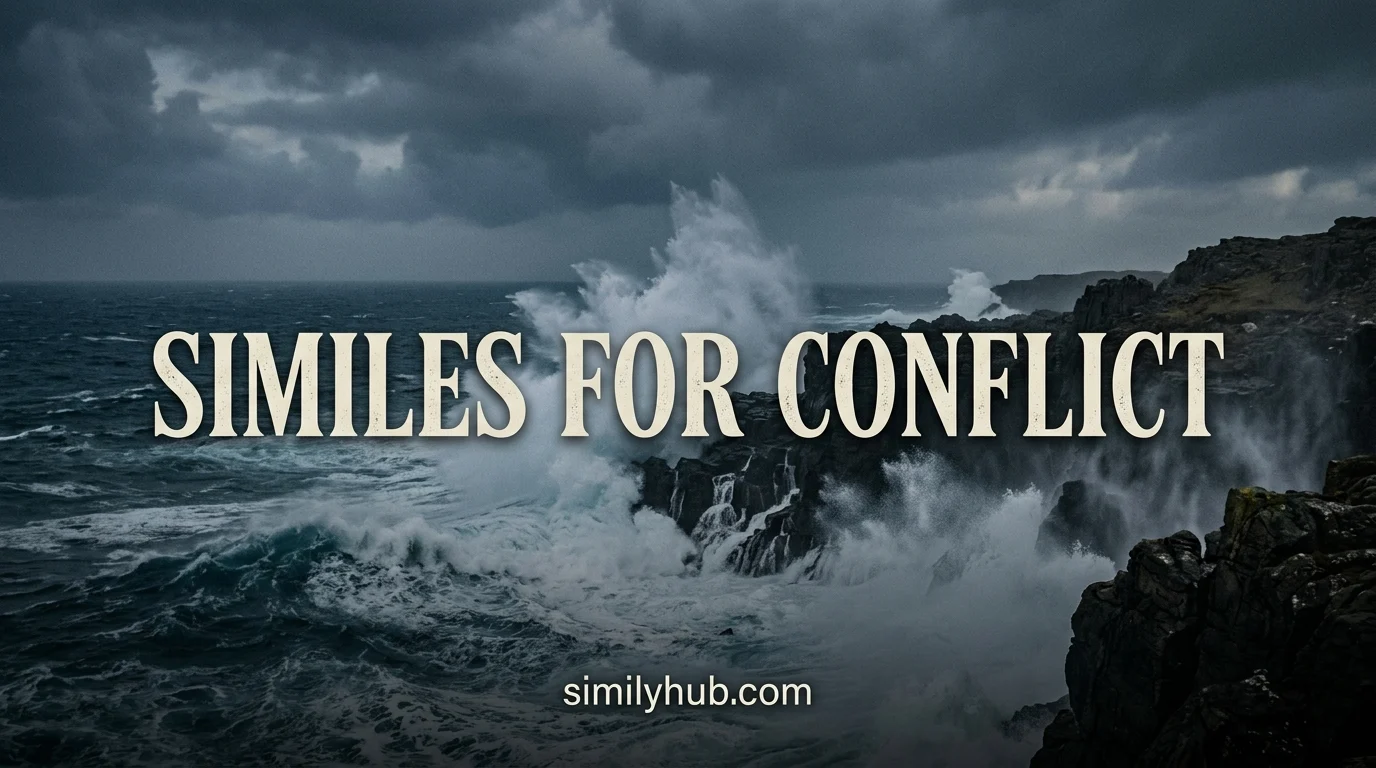
13. Conflict Like Waves Crashing on Rocks
Simile: Their arguments crashed like waves against rocks.
Meaning: A repeated conflict in which neither side changes its position.
Explanation: Waves keep hitting rocks but do not move them easily. This comparison shows the frustration of repeated disagreements.
Examples:
- Their debate crashed like waves against rocks as each person defended the same view.
- His complaints came like waves against rocks, but she would not listen.
14. Conflict Like a Broken Mirror
Simile: Their relationship was like a broken mirror after the fight.
Meaning: A damaged relationship that may never be exactly the same.
Explanation: A broken mirror cannot easily return to its original shape. This simile shows how conflict can break trust and leave lasting hurt.
Examples:
- Their friendship was like a broken mirror after the betrayal.
- The harsh argument left their bond like a broken mirror.
15. Conflict Like a Dark Cloud
Simile: The disagreement hung over the family like a dark cloud.
Meaning: A conflict that brings sadness and worry.
Explanation: A dark cloud can make a bright day feel gloomy. This simile shows how tension can affect everyone’s mood.
Examples:
- The fight hung over the classroom like a dark cloud.
- Their unresolved problem followed them like a dark cloud all week.
16. Conflict Like a Battlefield
Simile: The debate became like a battlefield.
Meaning: A situation where people fight hard to defend their views.
Explanation: A battlefield is a place of struggle. This simile helps readers picture a fierce debate in which each side tries to win.
Examples:
- The town meeting became like a battlefield when the issue of new roads came up.
- Their discussion turned into a battlefield of competing ideas.
17. Conflict Like a Broken Record
Simile: Their argument was like a broken record.
Meaning: A disagreement in which the same points are repeated again and again.
Explanation: A broken record repeats the same sound. This simile shows how a conflict can go in circles without a solution.
Examples:
- They sounded like a broken record as they repeated the same complaints.
- Their fight was like a broken record, with no new ideas or answers.
18. Conflict Like a Bridge Under Strain
Simile: Their trust was like a bridge under strain.
Meaning: A relationship that is struggling to survive a conflict.
Explanation: A bridge under heavy pressure may crack or collapse. This simile shows how repeated disagreements can weaken trust.
Examples:
- Their friendship was like a bridge under strain after months of arguments.
- The team’s trust felt like a bridge under strain as blame grew.
19. Conflict Like a Fire Between Two Houses
Simile: Their feud burned like a fire between two houses.
Meaning: A bitter conflict that separates people or groups.
Explanation: Fire can spread and damage everything nearby. This simile shows how anger can affect not only the people involved but also those around them.
Examples:
- The rivalry burned like a fire between two houses, dividing the whole neighborhood.
- Their family feud spread like a fire, drawing other relatives into the dispute.
20. Conflict Like Ice Cracking
Simile: Their calm conversation was like ice cracking on a frozen lake.
Meaning: A tense situation in which peace may break at any moment.
Explanation: Cracking ice suggests danger beneath a quiet surface. This simile creates suspense and hints that hidden anger may soon appear.
Examples:
- The silence between the rivals felt like ice cracking beneath their feet.
- His calm voice was like ice cracking as he finally spoke about the betrayal.
Practical Exercise: Test Your Simile Skills
Now it is your turn! These 10 questions will help you understand the meaning of similes and learn how to use similes in writing.
Try answering each question before checking the answer key.
Questions
1. Complete the simile:
Their argument was like a ______ because it was loud and difficult to control.
2. What does this simile mean?
“Their disagreement stood between them like a wall.”
A. They lived in the same house.
B. Their conflict created distance between them.
C. They built a new room.
3. Fill in the blank:
The rumor spread like ______ through the school.
4. Identify the simile:
“Their fight was like a broken mirror.”
5. What does this simile suggest?
“His words cut like a knife.”
A. His words were kind.
B. His words caused emotional pain.
C. His words were hard to hear.
6. Complete the simile:
Their repeated argument was like a broken ______.
7. What kind of conflict does this describe?
“Their silence was like a ticking time bomb.”
8. Write your own simile about a disagreement between friends.
Use the word like or as.
9. Choose the best simile:
The team felt more and more tense as the meeting continued.
A. The team was as light as a feather.
B. The meeting felt like a pressure cooker.
C. The room was as bright as the sun.
10. Complete the sentence with a suitable simile:
The unresolved conflict hung over the family like ______.
Answers and Explanations
1. Answer: A storm.
Explanation: A storm is loud and powerful, just like a heated argument.
2. Answer: B. Their conflict created distance between them.
Explanation: The wall represents a barrier that makes it hard for people to connect.
3. Answer: Wildfire.
Explanation: A wildfire spreads quickly, just as rumors and conflicts can grow fast.
4. Answer: “Their fight was like a broken mirror.”
Explanation: The word like connects the fight to a broken mirror, making this a simile.
5. Answer: B. His words caused emotional pain.
Explanation: The knife represents the sharp emotional effect of cruel words.
6. Answer: Record.
Explanation: A broken record repeats the same sound, just as people may repeat the same complaints.
7. Answer: A hidden conflict that could erupt at any moment.
Explanation: A ticking time bomb creates suspense because an explosion may happen soon.
8. Sample answer: Their disagreement was like a storm that slowly passed.
Explanation: This simile compares the disagreement to a storm and suggests that the tension may eventually end.
9. Answer: B. The meeting felt like a pressure cooker.
Explanation: A pressure cooker represents rising stress and emotions in a tense situation.
10. Sample answer: A dark cloud.
Explanation: A dark cloud represents sadness, worry, or tension that remains until the conflict is resolved.
You can create other correct answers for questions 8 and 10. The key is to make a clear comparison that helps readers picture the conflict.
Conclusion
Similes for conflict help you turn simple descriptions into powerful images. Instead of saying that two people argued, you can compare their disagreement to a storm, a battlefield, or a pressure cooker. These comparisons help readers understand the feelings, tension, and damage that conflict can cause.
As you have seen, the meaning of similes depends on the image you choose. Some similes show anger and chaos, while others express sadness, broken trust, or hidden tension. The best choice depends on the mood and message of your writing.
When practicing creative writing similes, think about what a conflict looks, sounds, or feels like. Then compare it to something your reader can picture. Try writing three original simile sentences today. With practice, your writing will become clearer, more expressive, and more memorable.

I am Beau Thomas, the Administrator at SimilyHub. I enjoy making similes, metaphors, and idioms easy to understand through clear explanations, helpful examples, and engaging content for English learners and writers.